
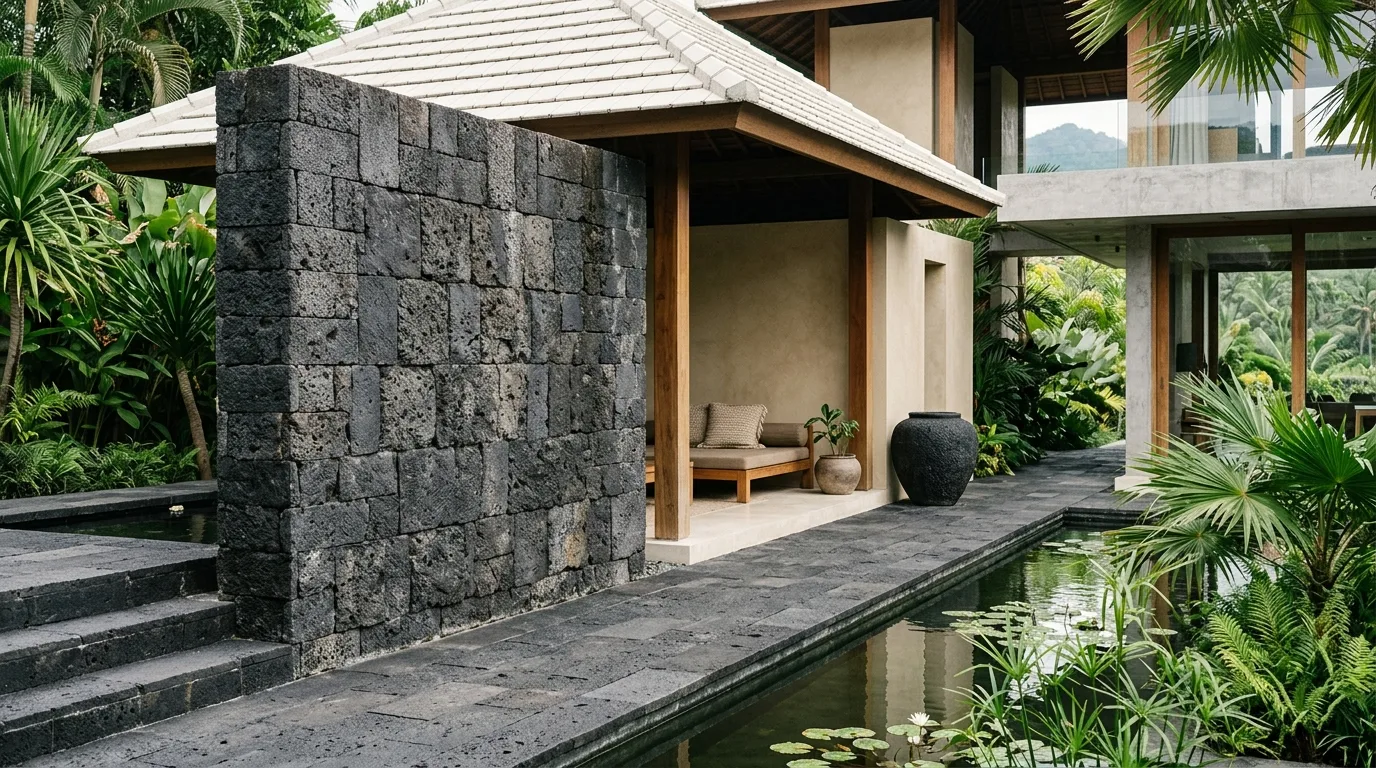
What Is Black Lava Stone and Why Do Designers Use It? is best approached as a material and project-planning question, not simply as a search for a visually attractive stone. The right result depends on how the material looks at project scale, how it is supplied, how it will be installed, and what conditions it will face after completion. This guide focuses on what is black lava stone while keeping those practical decisions at the centre of the discussion.
Start with the material itself
Black lava stone is a dark volcanic stone used in architecture and landscape design for its colour, texture and strong natural presence. The phrase can cover more than one commercial appearance, so buyers should not assume that every black lava stone product has identical texture or density. What matters in a project is the actual material being offered, its finish and its intended application.
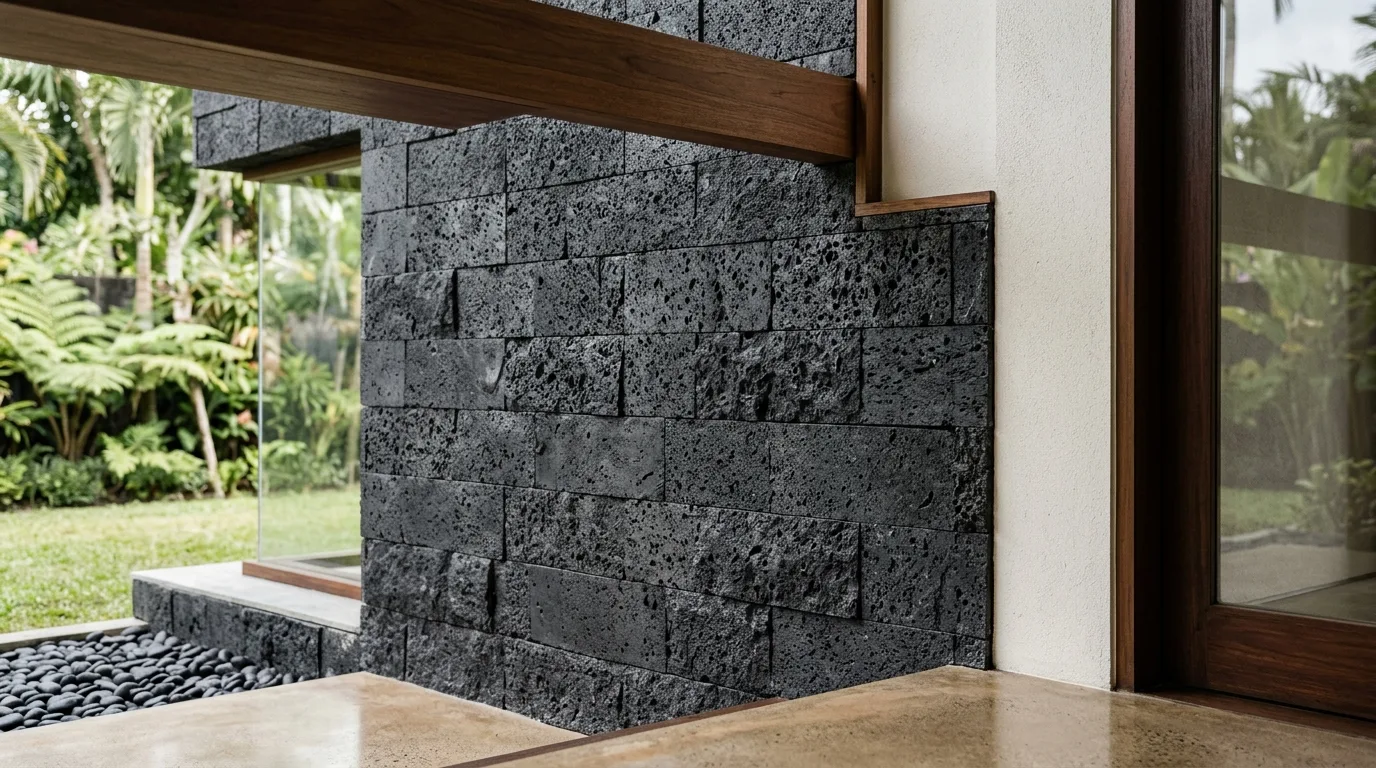
Why the volcanic appearance matters
The surface often has a visual character associated with cooled volcanic material: dark tones, mineral variation and, depending on the product, small cavities or a porous-looking texture. These details give the stone visual depth. Under direct sunlight the surface can reveal subtle relief; under softer light it can read as a calm, almost monolithic plane.
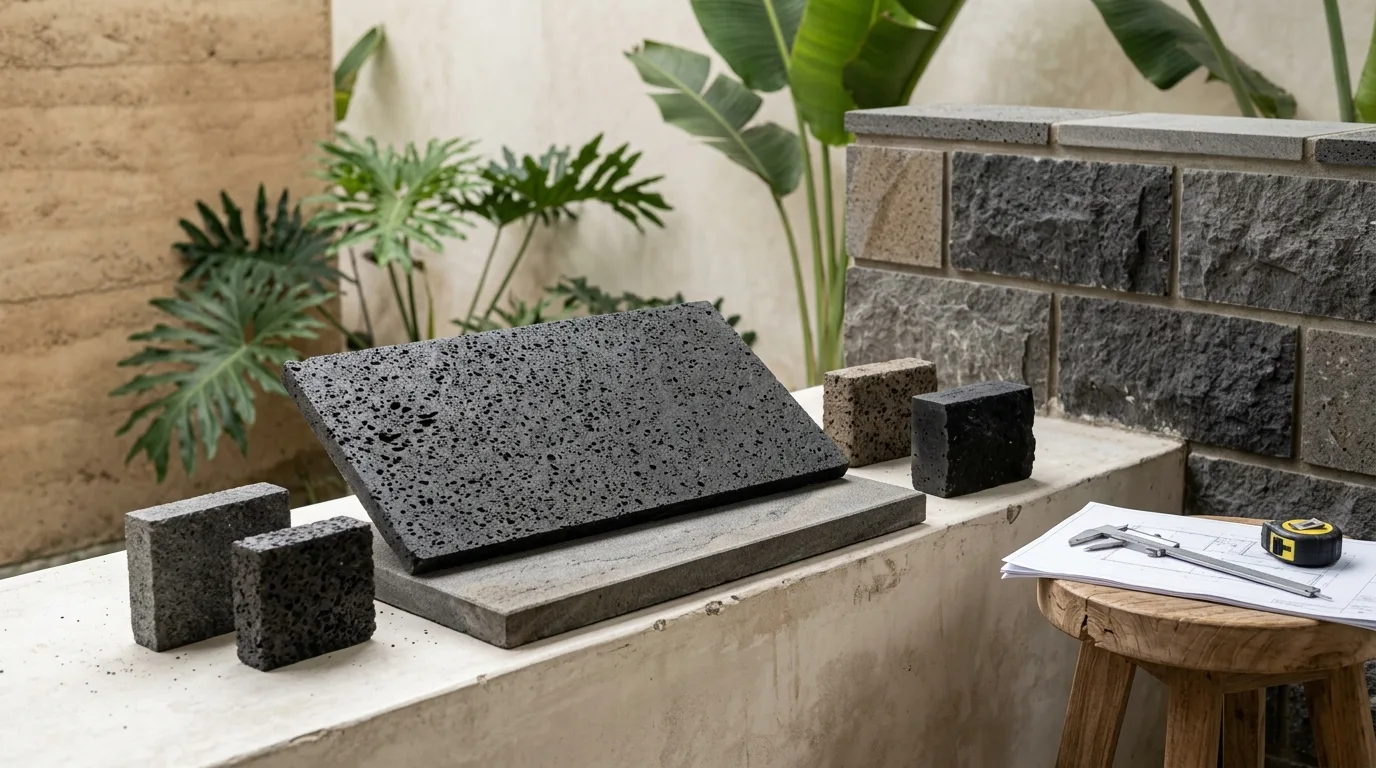
Review a representative physical sample before a large commitment.
Define dimensions, finish, colour or variation expectations in writing.
Match the product format to the actual application and installation system.
Confirm quantity, packing and destination when purchasing internationally.
How designers use the darkness
Dark stone can establish visual weight in a space. A black wall may frame a pool, garden or entrance without competing with planting. A dark landscape element can also make lighter gravel, water or foliage appear brighter. The effect is less about adding decoration and more about controlling contrast.
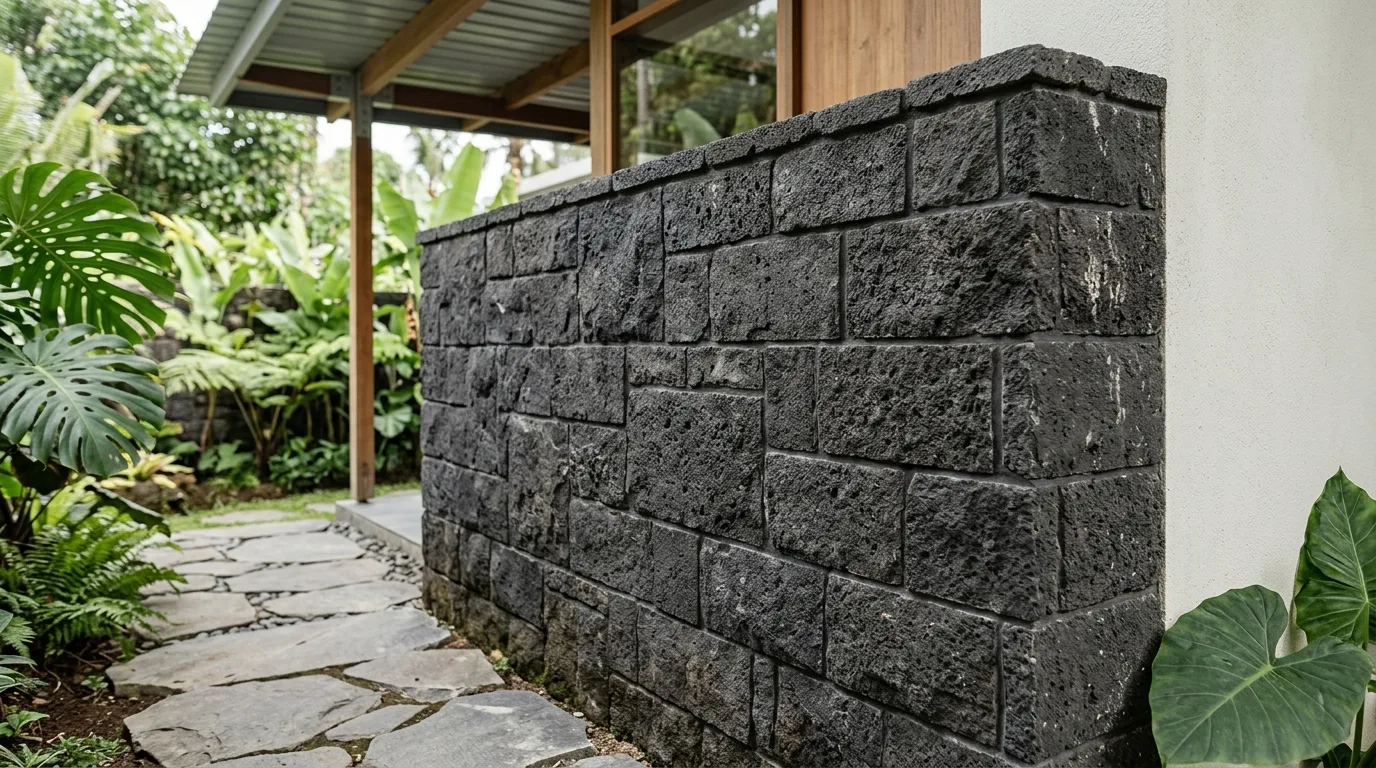
Applications beyond feature walls
Although feature walls are a natural fit, black lava stone can also be considered for selected paving, garden structures, water features, retaining elements and architectural accents. Application should always follow the supplied product specification and the requirements of the site. A surface suitable for a vertical wall should not automatically be assumed suitable for a demanding floor.
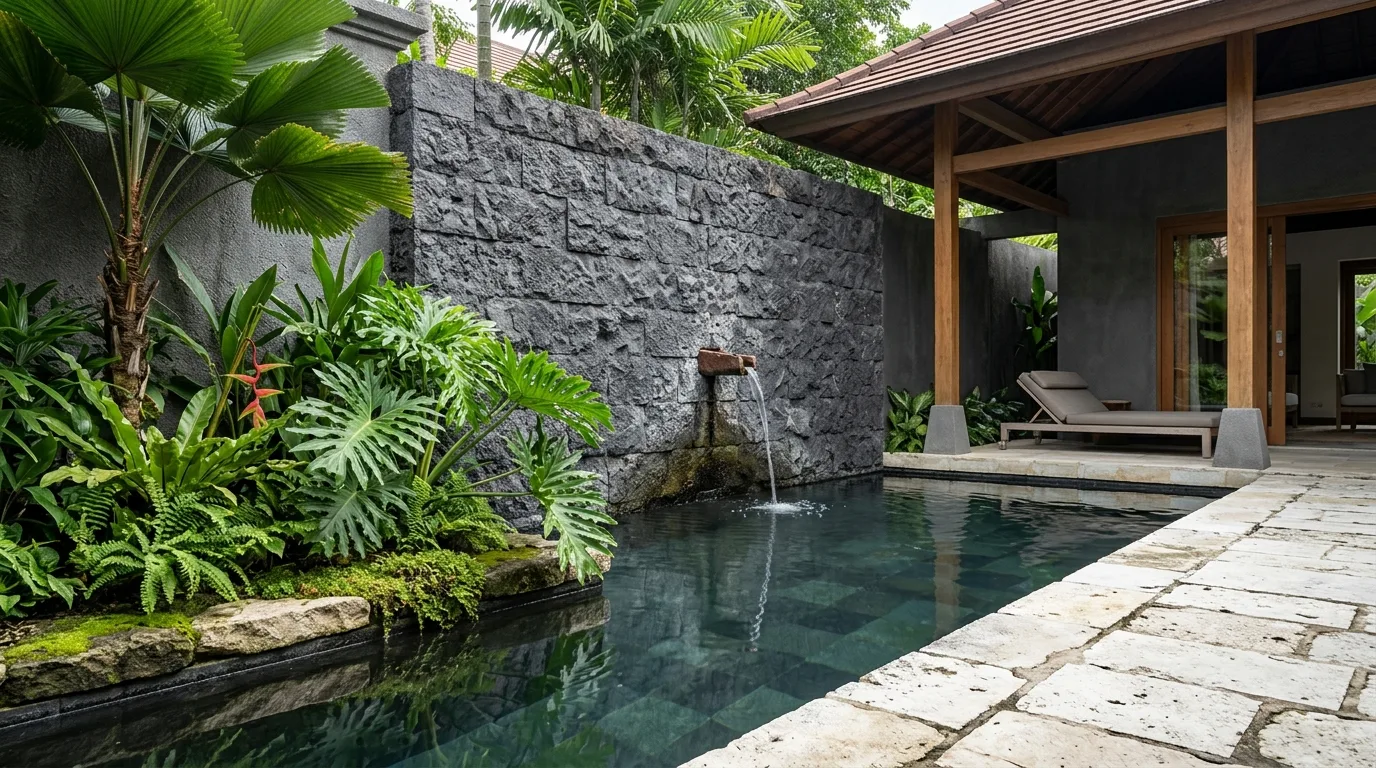
Natural variation is expected
A natural volcanic material can vary in tone and texture. This is particularly visible when pieces are viewed together rather than individually. Before a large order, buyers should establish what range of variation is acceptable and keep a reference sample. This avoids the common mistake of treating a single photograph as a guarantee of uniformity.
A useful specification separates what is visually preferred from what is technically required. That distinction helps the design team preserve the natural character of the stone while giving procurement and production a clear target.
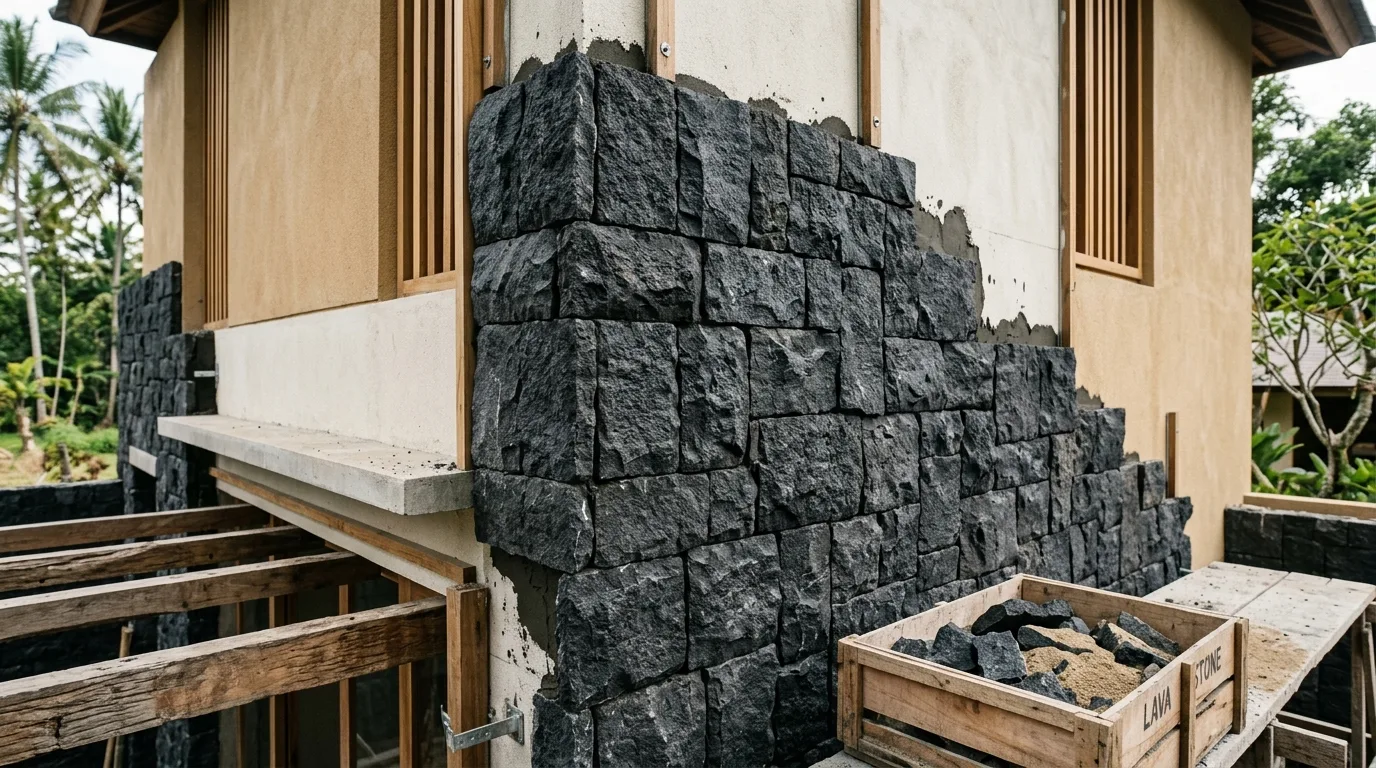
Finish changes the result
Two stones with similar base colour can produce very different architecture when their finishes differ. A more textured face emphasizes relief and shadow, while a smoother surface creates a quieter appearance. The finish should be selected alongside the lighting, scale and maintenance expectations of the project.
How to evaluate a sample
Look at the stone from several distances. Examine the overall colour from across the room, then inspect pores, edges, texture and thickness at close range. If the stone will be installed outdoors, consider the surrounding climate, drainage and substrate as part of the evaluation rather than judging the stone in isolation.
The practical definition for buyers
In project terms, black lava stone is best understood as a family of dark volcanic natural-stone products whose exact appearance depends on source, selection, cutting and finishing. A clear specification turns that broad category into a defined product that can be quoted, produced, packed and installed with fewer misunderstandings.
From geological material to architectural product
Once black lava stone is selected, the project moves from a broad material description to a specific commercial product. Cutting, sizing, finishing, sorting and packing all shape what eventually reaches the site. That is why the words used in a design brief should describe the finished product rather than only its geological identity. Clear communication at this stage helps prevent a mismatch between an attractive reference photograph and the material that is actually manufactured and delivered.
Turning the material choice into a project specification
Once the design direction is established, record the decision in measurable terms. Identify the stone, intended application, nominal dimensions, thickness where relevant, surface finish, acceptable natural variation, estimated quantity and destination. Keep the approved sample or a documented reference with the purchase information. For export orders, also record the agreed packing and shipping scope. This creates a single reference that can be used by the supplier, purchaser, freight provider and installer.
Specification area | What to define | Why it matters |
|---|---|---|
Material | Stone type, colour range, surface character | Aligns the visual expectation |
Format | Size, thickness, shape or piece range | Supports production and installation planning |
Quality | Acceptable variation and inspection reference | Creates realistic expectations for natural material |
Logistics | Packing, quantity, destination and shipping scope | Clarifies delivered-project assumptions |
Final considerations
The value of what is black lava stone comes from how well its natural character fits the intended space. A successful project does not require every piece to look identical. It requires the expected range of appearance, the technical application and the supply process to be understood before the material is ordered. For Indonesian natural stone projects, early sample approval, clear specifications, appropriate packing and coordinated delivery can make the transition from design concept to finished installation much more predictable.
Explore the available natural stone products or visit our contact page to discuss a project-specific requirement.
Frequently Asked Questions
How should I evaluate what is black lava stone?
Start with the actual application, then review a representative sample for colour, texture, size and finish. The material should be judged together with the surrounding architecture and installation conditions.
Should natural variation be specified?
Yes. Natural stone is not a factory-printed surface. Defining an acceptable visual range makes sample approval, production and inspection much clearer.
What information should an international buyer provide?
Provide the application, product type, dimensions or size range, finish, quantity, destination and any packing or shipping requirements. This gives the supplier enough context to prepare a meaningful quotation.