
Packaging
Natural Stone Packaging
Packing is what stands between a finished batch and the same batch arriving in usable condition. The method is agreed per order, because the right answer depends on the format, the finish and the route.
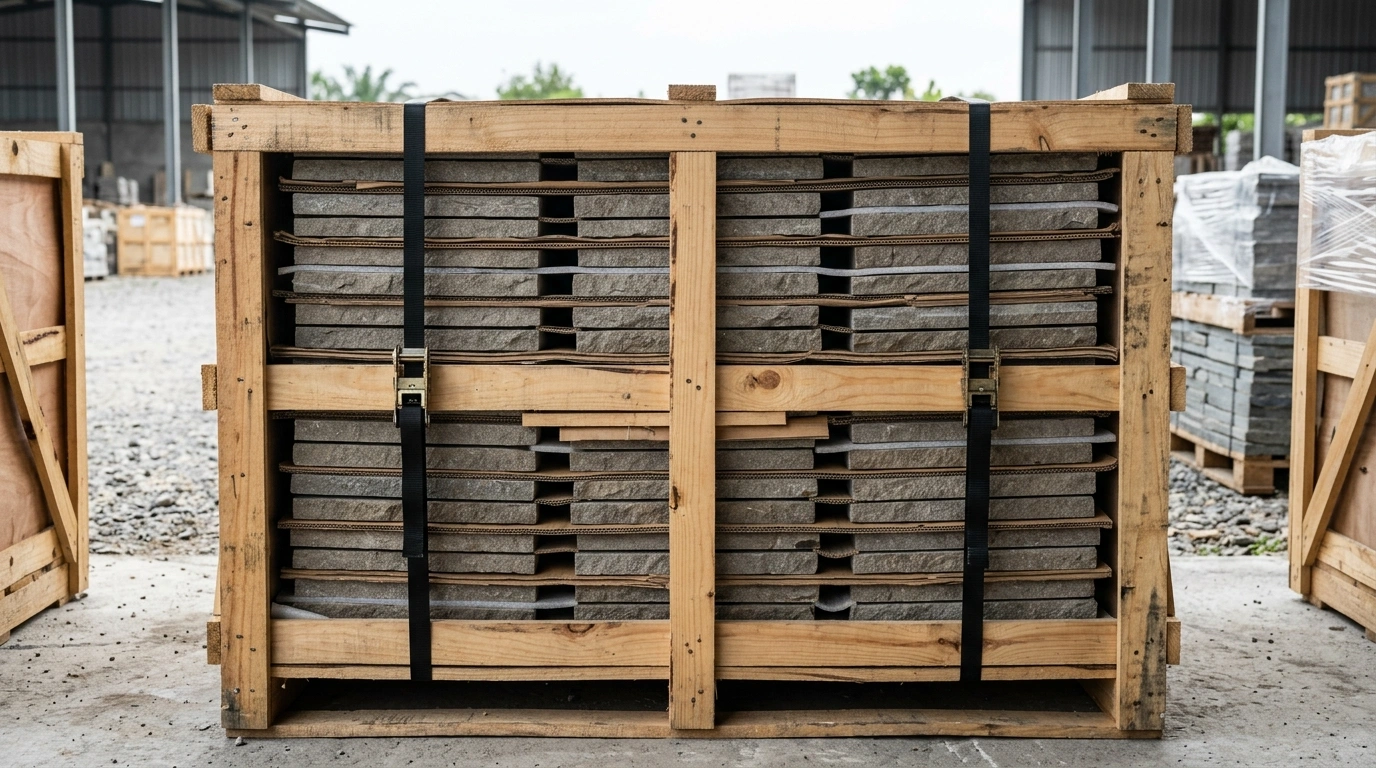
Overview
Stone is heavy, brittle at its edges and handled by machinery it never meets again after loading. Packaging exists to survive that: the yard, the truck, the port, the crossing and the unloading.
Because the demands change with the format and the finish, the packing method is part of the quotation. A general answer on a website would be a guess dressed up as a standard.
Packing approach
Five decisions made with the order
The method is not a fixed policy. These are the decisions that have to be settled before packing starts, and each one depends on the order in front of it.
- Packing unit
Crates or pallets, depending on the format, the weight and how the cargo has to be handled at both ends. The unit is agreed in the quotation rather than assumed, because it also sets the quantity per unit.
- Protection between pieces
How faces are separated and how corners are protected is decided against the finish. A polished face and a textured face need different treatment, and the route decides how much protection is enough.
- Unit weight and handling
A unit has to be liftable by the equipment at the yard, at the port and at the destination. That is a constraint on the unit, not a detail to settle at loading.
- Labelling and identification
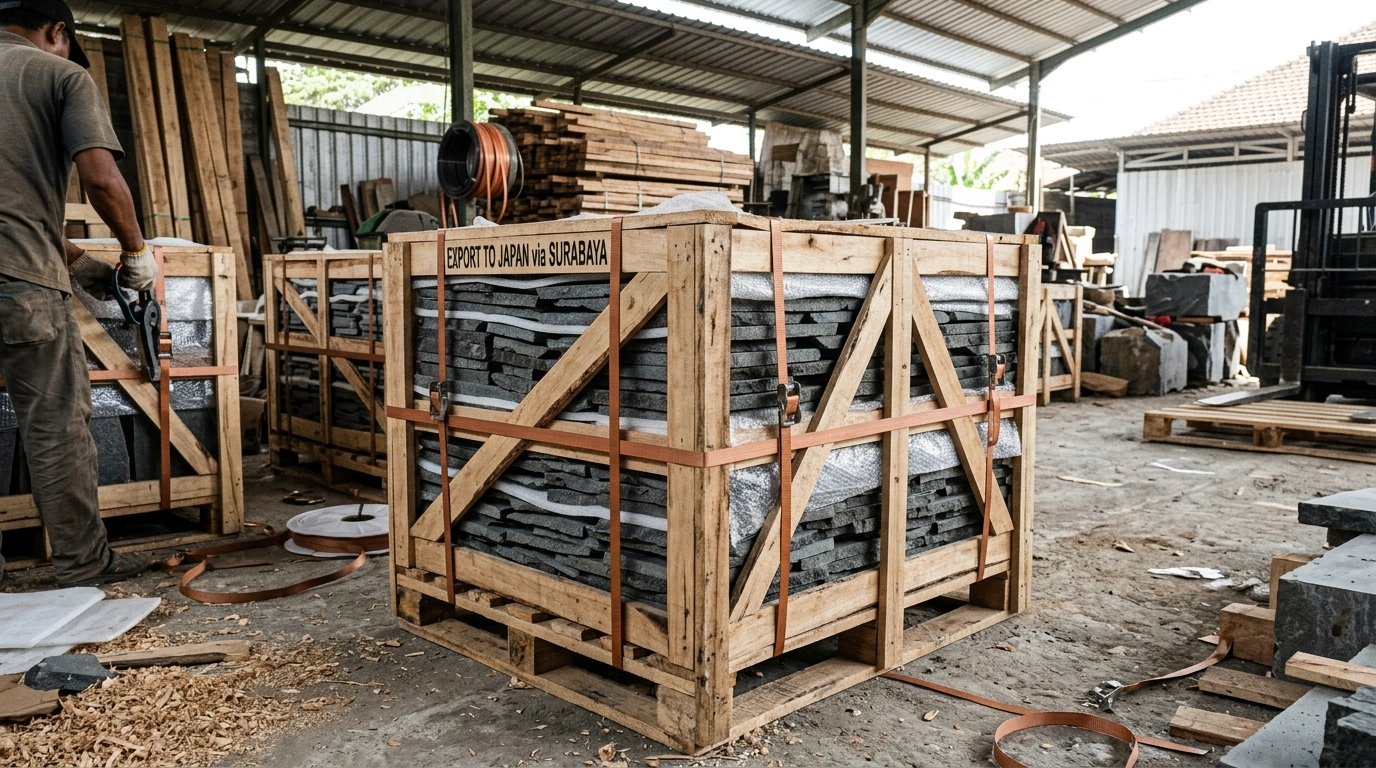
Every unit is labelled so the batch can be identified against the order at both ends. The labelling scheme is confirmed with the order because it has to mean something to whoever opens the container.
- Loading sequence
The order in which units go into the container follows the discharge plan, so that the load can be taken out in the sequence the site actually needs it.
Labelling and identification
So the container can be read from the outside
A container of stone is only useful if the units inside can be identified against the order without unpacking the load. Labelling is what makes that possible at the destination as well as at the port of loading.
The scheme is agreed with the order, because a label only works if it means the same thing to the person who packed it and the person who opens it.
Loading preparation
Packing is finished before loading starts
A packed unit is ready to load only when the count, the labels and the protection are all confirmed. That check is the subject of the next page in this sequence.
Packaging enquiry
Tell us how the stone will be handled
The format, the finish, the destination and how the load comes out at the other end. That is what decides how it should be packed.