
Container loading
Natural Stone Container Loading
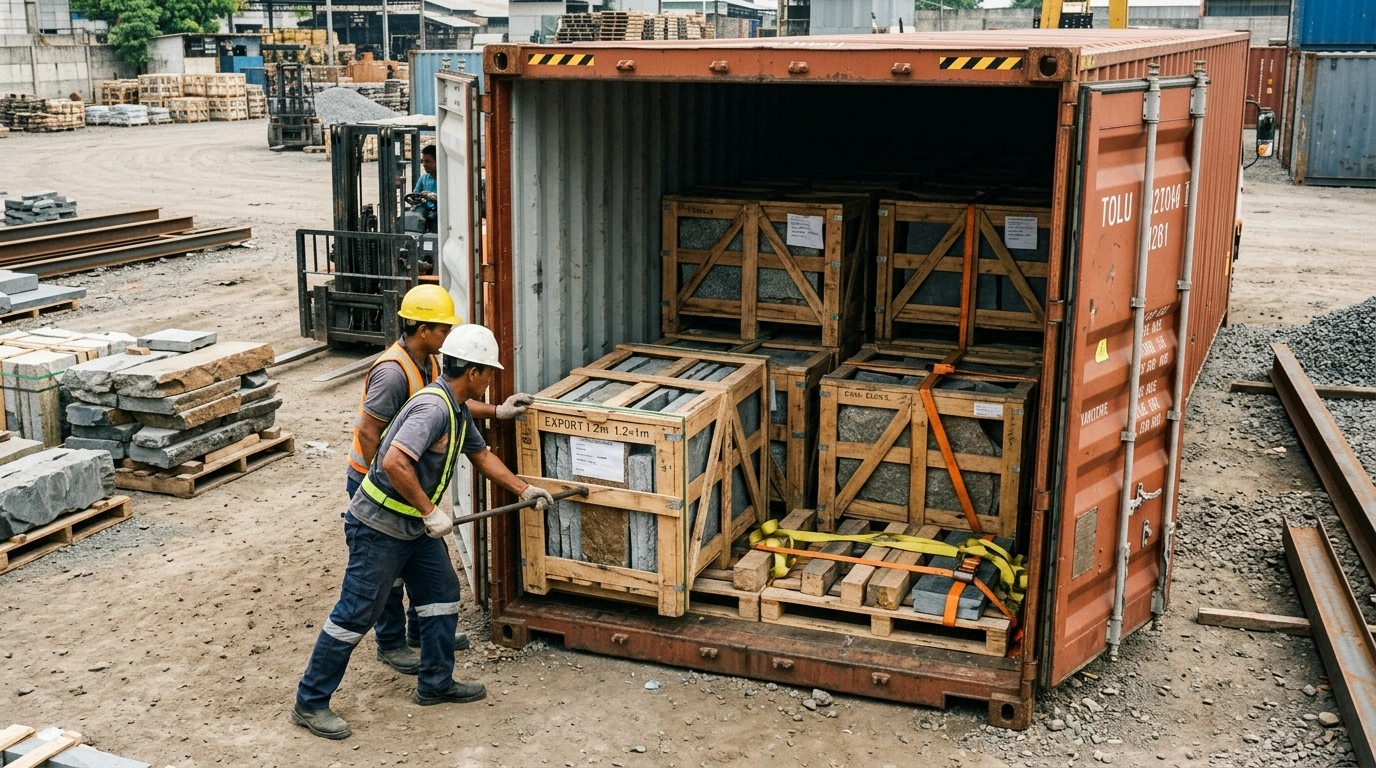
Loading is the last controlled step in an export order. After the doors close, the load travels on its own, so what happens in the hour before that decides how the shipment arrives.
Overview
A container is loaded once, and everything that is wrong with the load is wrong for the whole voyage. That is why this step is treated as a check rather than as labour: nothing new is decided here.
This page describes the sequence in general terms. Load plans and lashing detail are specific to the cargo, the container and the route, so they are confirmed for the order rather than published as a single method.
Preparation
Three things confirmed before loading starts
If any of these is unfinished, loading stops rather than proceeds. A loading that starts early is a loading that has to be redone.
- Cargo readiness
Every unit is finished, packed, labelled and counted before loading starts. Loading is not a place to finish packing, because anything corrected in the container is corrected in a hurry.
- Count and check
The units are counted and identified against the order, so the load that goes in matches the load that was agreed. Two counts, before and after, is the whole point.
- Container condition
The container is inspected before anything goes into it: floor, walls, roof and doors. A watertight container and a dry floor matter more to stone than most cargo.
Loading sequence
Four parts of the load itself
The arrangement is planned around how the cargo has to come out and what the voyage will do to it, in that order.
- 01
Order of loading
Units are loaded in the sequence the discharge plan needs, heavy pieces placed where they belong for the voyage rather than where they are easiest to put.
- 02
Space and movement
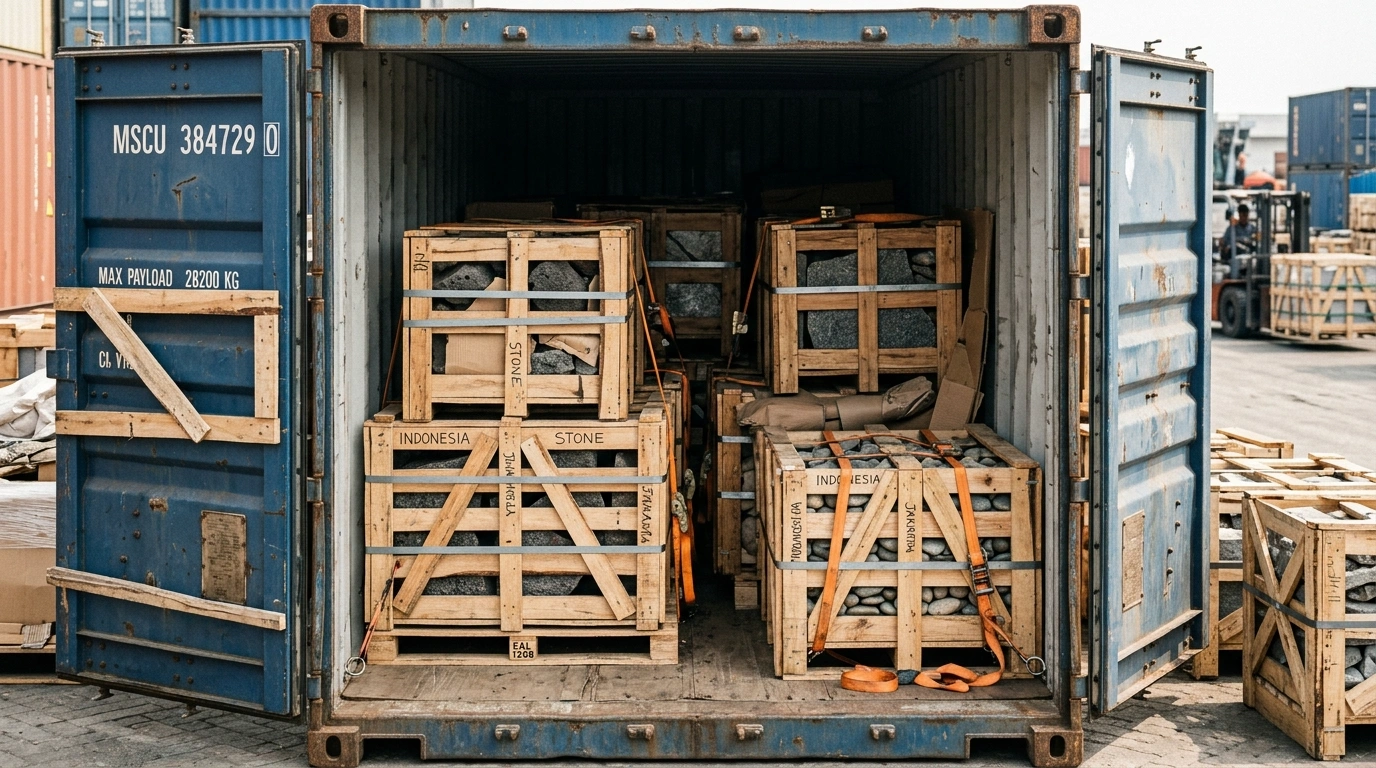
Gaps are closed so the load cannot shift on passage, and the arrangement is kept regular enough that the count can be verified at the other end by looking.
- 03
Protection of faces
Where a finished face is exposed in the load, it is protected rather than left to meet the unit next to it. This is where a good production batch is either kept or lost.
- 04
Loading record
The loaded arrangement and the count are recorded before the doors close, so there is a version of the load that exists outside the container.
Final checks
Before the doors close
The cargo condition, the count and the arrangement are checked one last time, and the loading record is completed. This is the point of no return for the shipment, which is exactly why the check happens here rather than on arrival.
Documentation readiness is part of the same check. A load that is ready while its papers are not is not ready.
Export enquiry
Ask about the loading plan for your order
Tell us the stone, the packing unit and the destination. You will get an answer about the load rather than a general description of a process.