
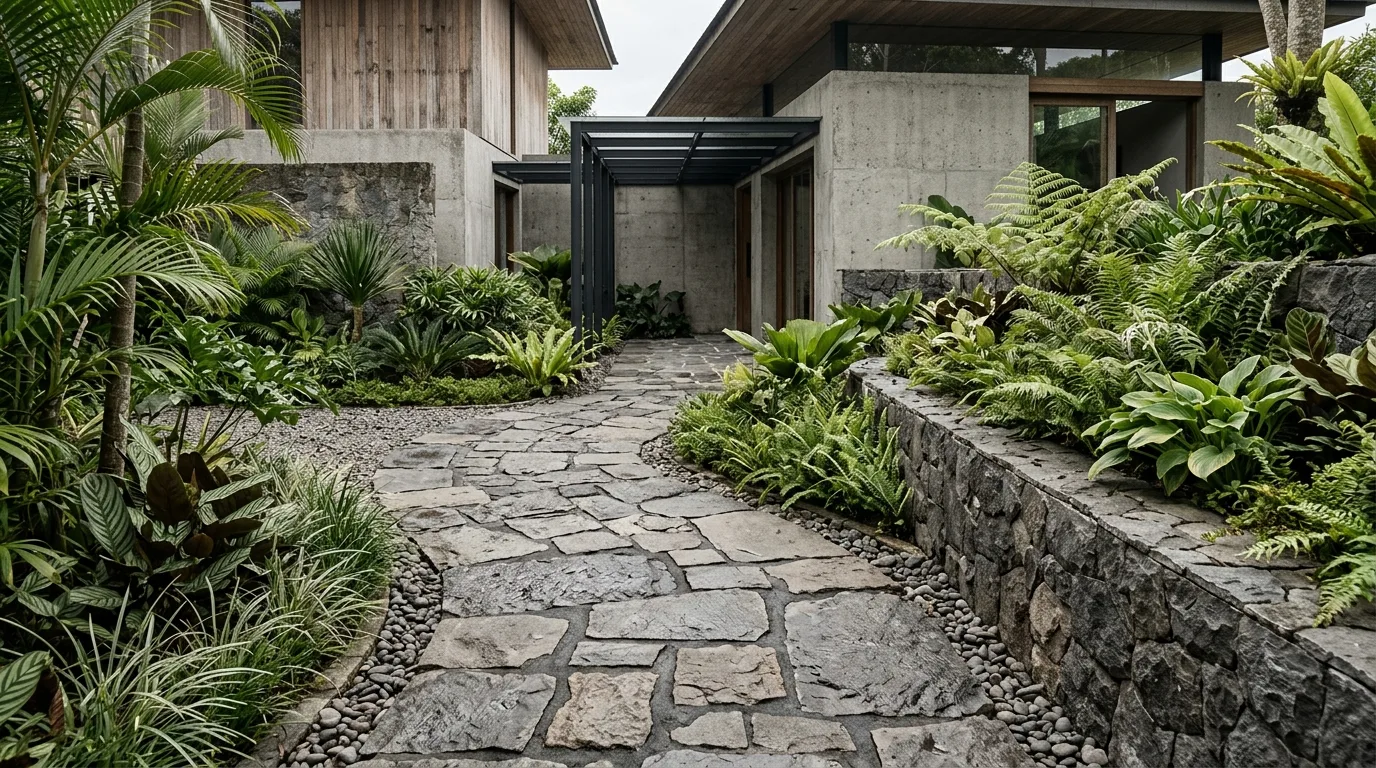
natural stone walkway is best understood through the context in which the material will actually be used. Natural stone can look very different depending on scale, finish, lighting, surrounding materials and installation method. For architects, designers, buyers and project owners, the goal is to turn a visual idea into a clear material decision that can be produced and installed consistently.
Map the movement
A walkway is primarily a circulation element. Its width, direction, curves and destinations should be established before choosing the stone format.
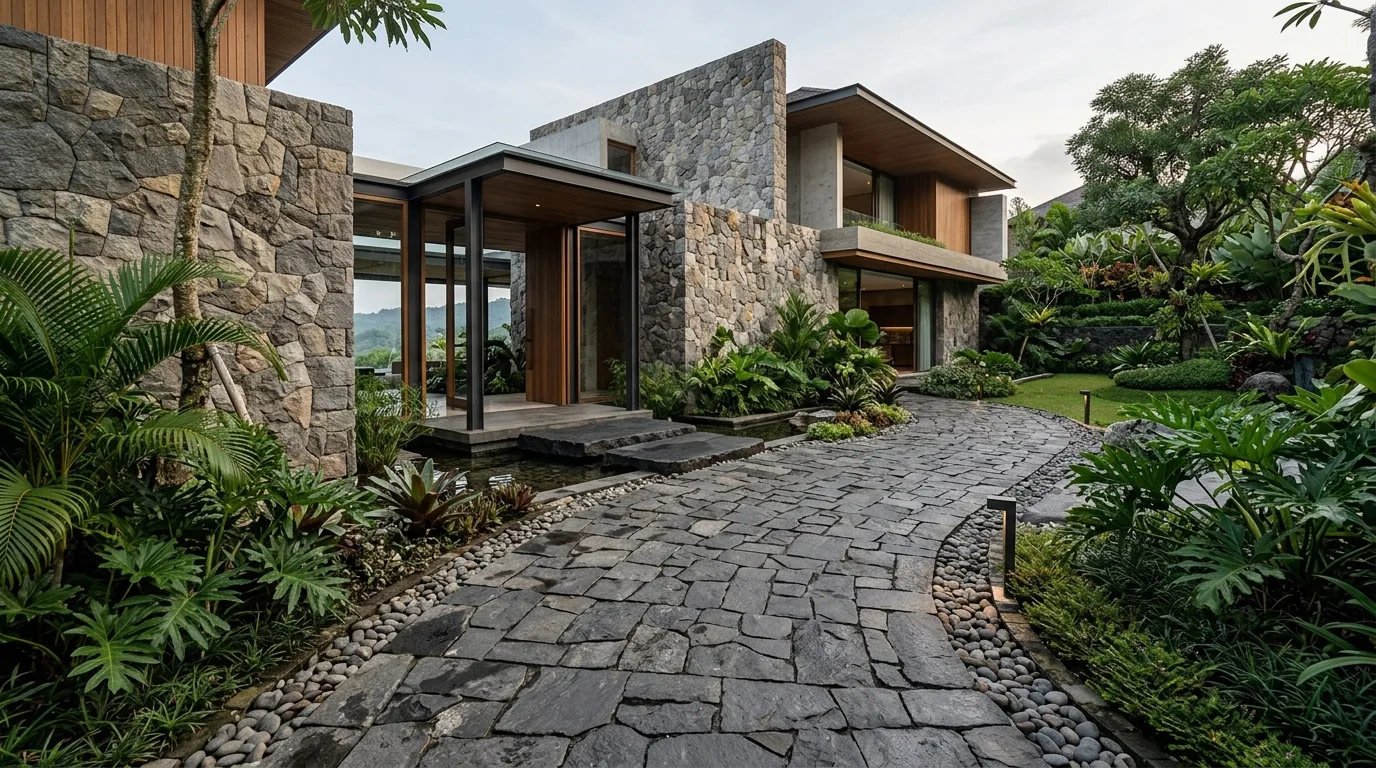
Choose a visual rhythm
Repeated rectangular pieces can create a formal path, while irregular stepping stones can produce a more relaxed garden route. The material should reinforce the intended movement.
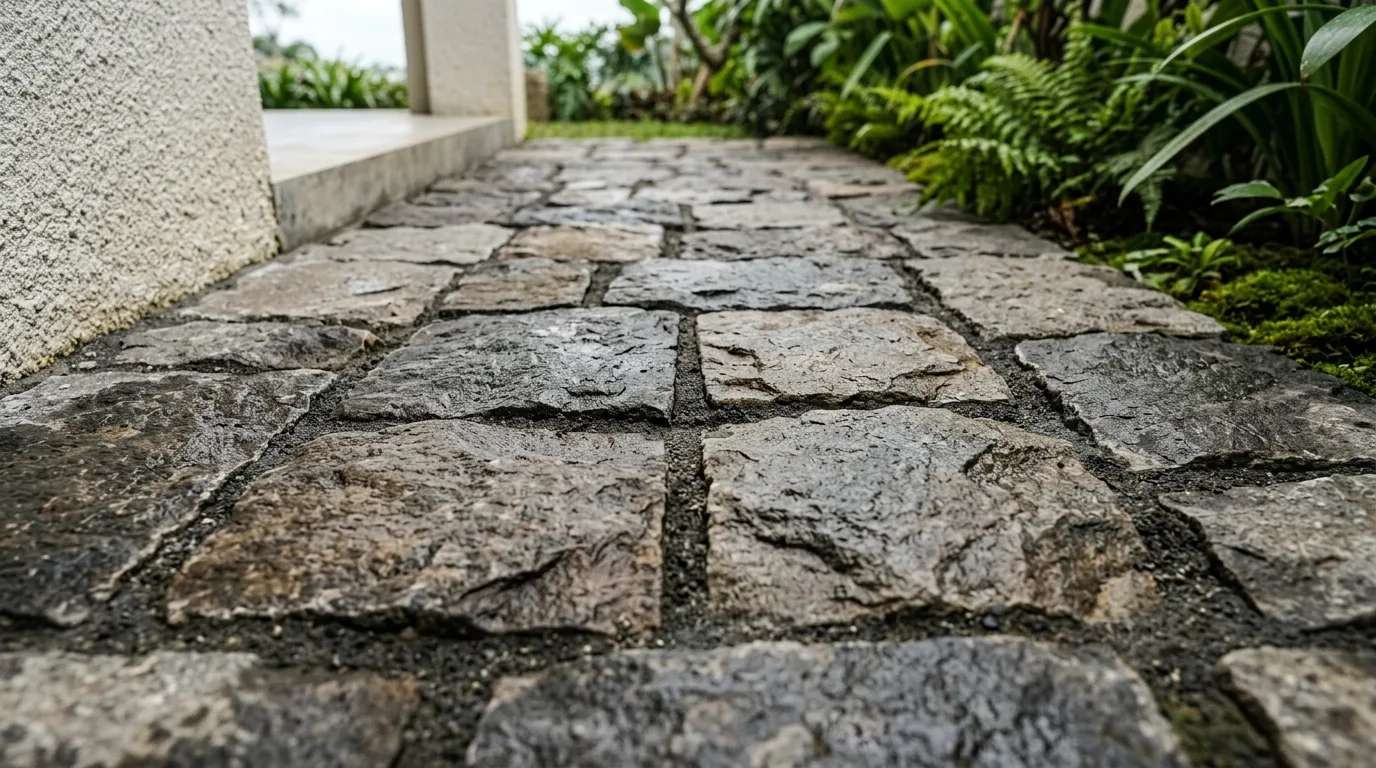
Consider the ground condition
Outdoor paths depend on proper base preparation, drainage and site grading. These construction requirements should be coordinated with the landscape professional.
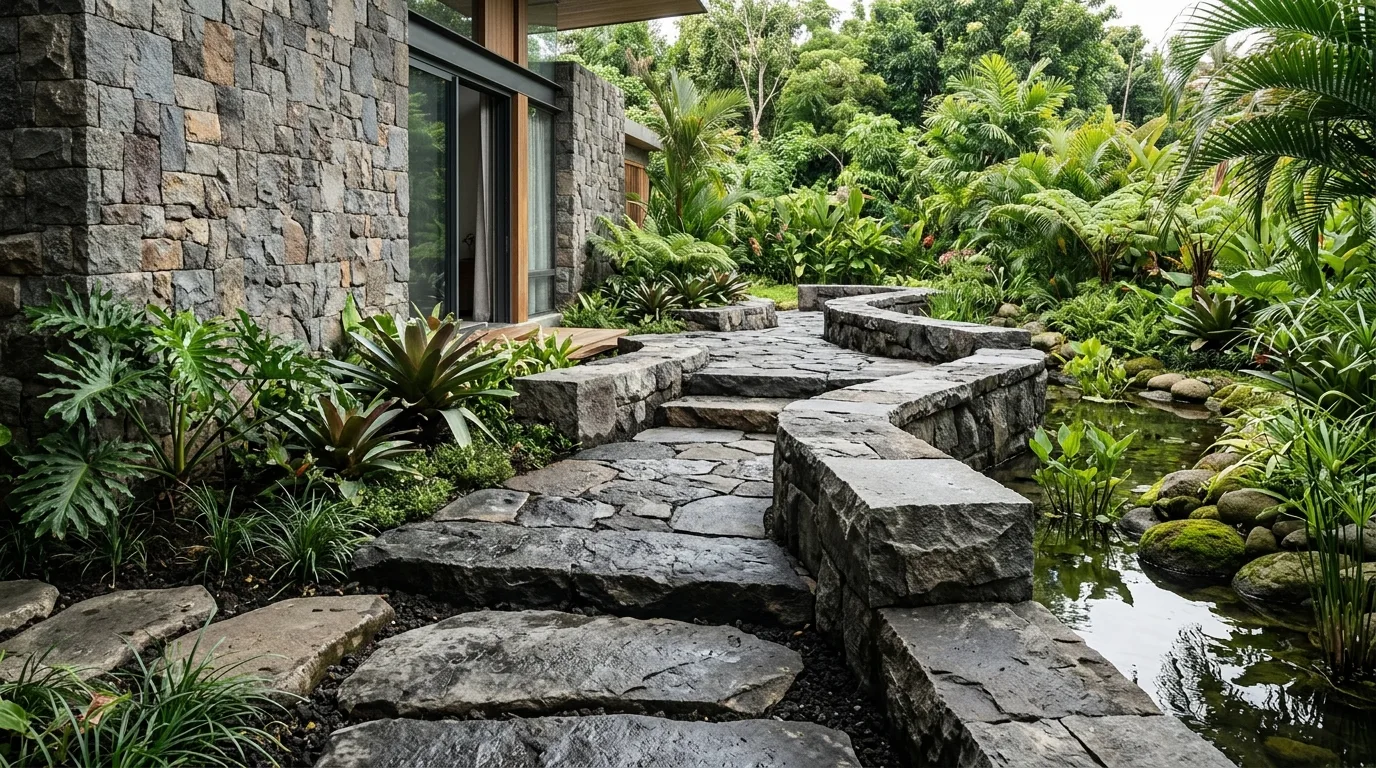
Create clear edges
Edging can define the walkway and prevent surrounding soil or loose material from migrating onto the surface. It also makes maintenance easier.
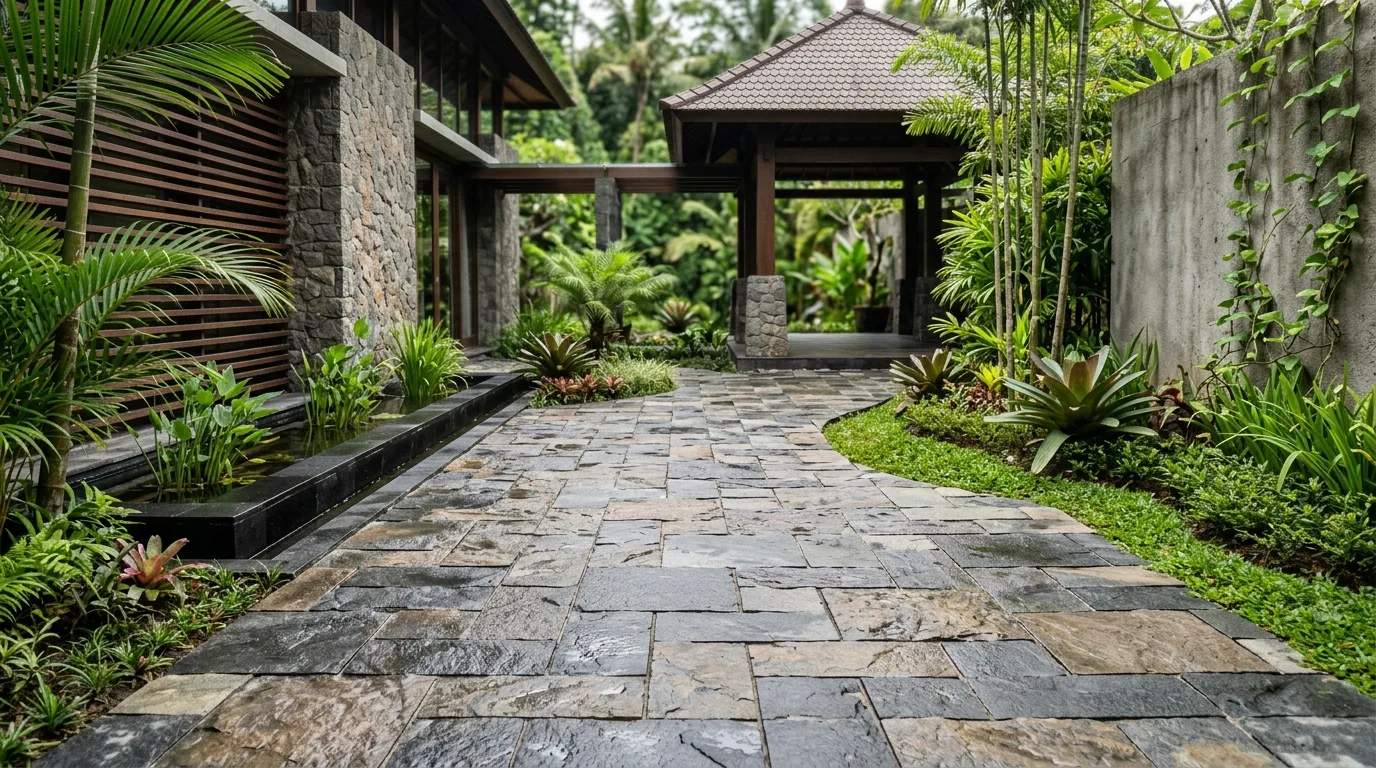
Work with planting
A stone path can be designed to weave through planting rather than simply divide it. The spacing and orientation of stones can help create a slower, more natural walking experience.
Use transitions intentionally
Where the path meets a patio, driveway or entrance, the material relationship should be deliberate. Changes in scale can mark the transition between zones.
Plan for cleaning and access
Leaves, soil and rainwater affect outdoor paths. The design should allow practical maintenance without making the walkway difficult to use.
Questions to resolve before specifying the stone
Path width
Movement
Base preparation
Edging
Planting
Transitions
From design idea to a usable specification
Once the design direction is clear, document the selected natural stone walkway with the actual stone reference, dimensions, thickness, finish, quantity and intended application. If the project is using several related stone products, list each one separately. This prevents a broad description from being interpreted differently by the supplier, production team and installer.
Physical samples are particularly useful for natural stone because the finished surface contains geological variation. For large projects, review several pieces together and establish an acceptable visual range. The approved reference should remain connected to the purchase order and drawings so production can be checked against the same design intent.
Final takeaway
The best approach to natural stone walkway is not to select a stone from a photograph alone. Evaluate the material in its intended setting, then confirm scale, finish, color, natural variation, installation requirements and maintenance expectations. A clear specification turns a good-looking material idea into a practical architectural product.
For international projects, procurement adds another layer of coordination. The final requirement should make clear whether the supplier is providing standard tiles, slabs, cut-to-size pieces, blocks or another product form. Packing, labeling and delivery planning should also be considered when the material will travel from Indonesia to the project destination. Clear information at the beginning reduces the chance of a visual concept being changed unintentionally during production.
It is also useful to review the selected material with the people responsible for installation before production is finalized. They can identify issues involving joints, corners, slopes, thresholds, penetrations or site access that may not be obvious in a mood board. When design intent and construction information are aligned early, the natural character of the stone can remain visible without creating avoidable site complications.
A final project record should include the approved sample, photographs, product description, dimensions, finish and relevant drawings. This record becomes a practical reference for future maintenance, replacement or repeat orders. It also helps preserve consistency when a project is delivered in phases or when different teams are involved at different stages.