
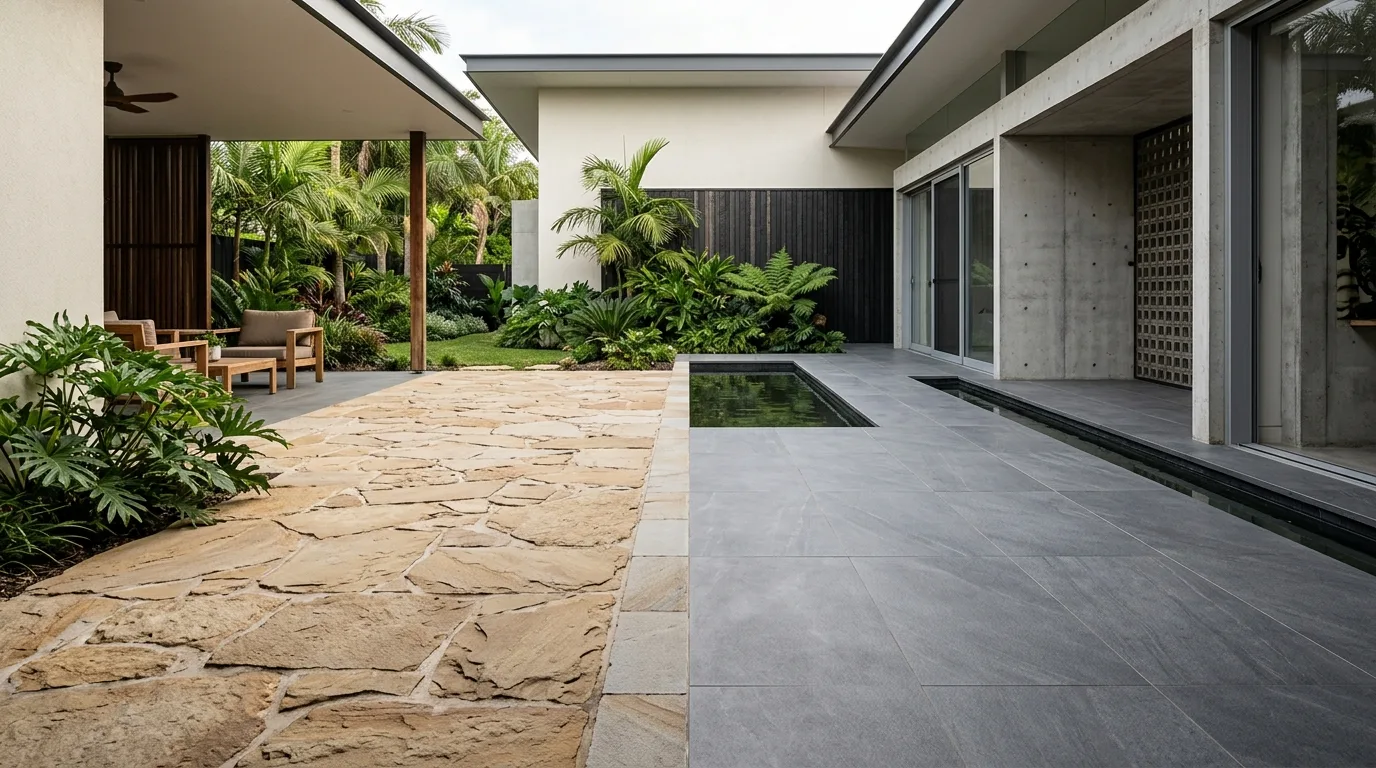
Choosing between natural stone or porcelain paving is less about finding a universal winner and more about understanding how each material fits the specific outdoor project. Both can create attractive terraces, patios, pool surrounds and garden paths, but they arrive at the project with different material characteristics, visual behavior, manufacturing processes and specification considerations. The most useful comparison begins with the intended application, site conditions and design language.
Start With the Outdoor Setting
Before comparing products, define where the paving will be installed. A private patio, hotel terrace, pool deck, garden path and commercial courtyard can have very different requirements. Consider exposure to rain and sunlight, expected foot traffic, drainage, furniture, cleaning routines and the relationship with nearby buildings.
Natural stone is a quarried material that is cut and finished into paving products. Porcelain paving is a manufactured ceramic product produced to controlled dimensions and designs. This fundamental difference affects how each material presents variation and how the project team approaches product selection.
Compare the Visual Character
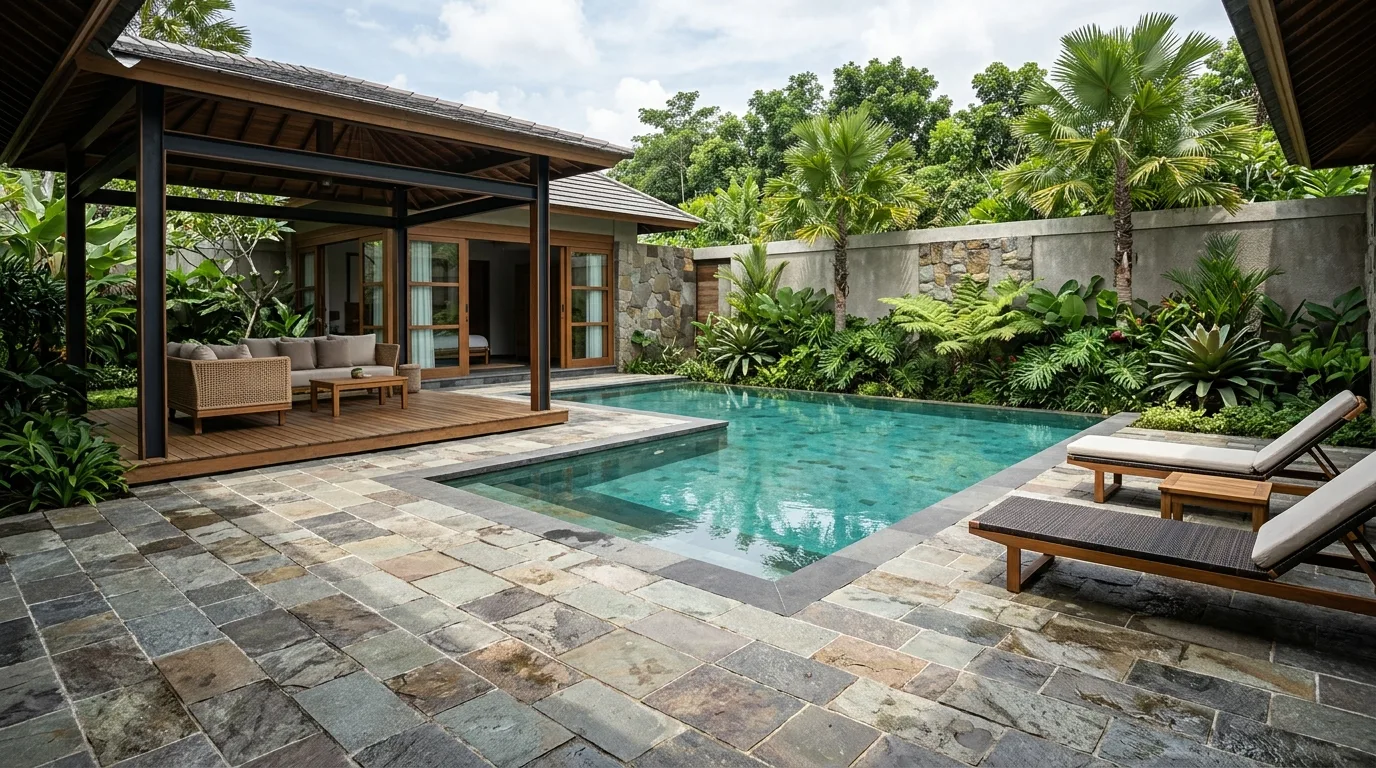
Natural stone carries geological variation from piece to piece. Color movement, texture and mineral characteristics can make a paved area feel connected to its physical material origin. The amount of variation depends on the particular stone and source, so a sample should be treated as a reference rather than an assumption that every piece will be identical.
Porcelain paving can reproduce stone-like colors and textures while maintaining a manufactured visual pattern. Some products are designed to look highly natural, while others have a more clearly contemporary appearance. The important distinction is that the visual consistency comes from a manufactured product design rather than from a geological formation.
Think About Format and Layout
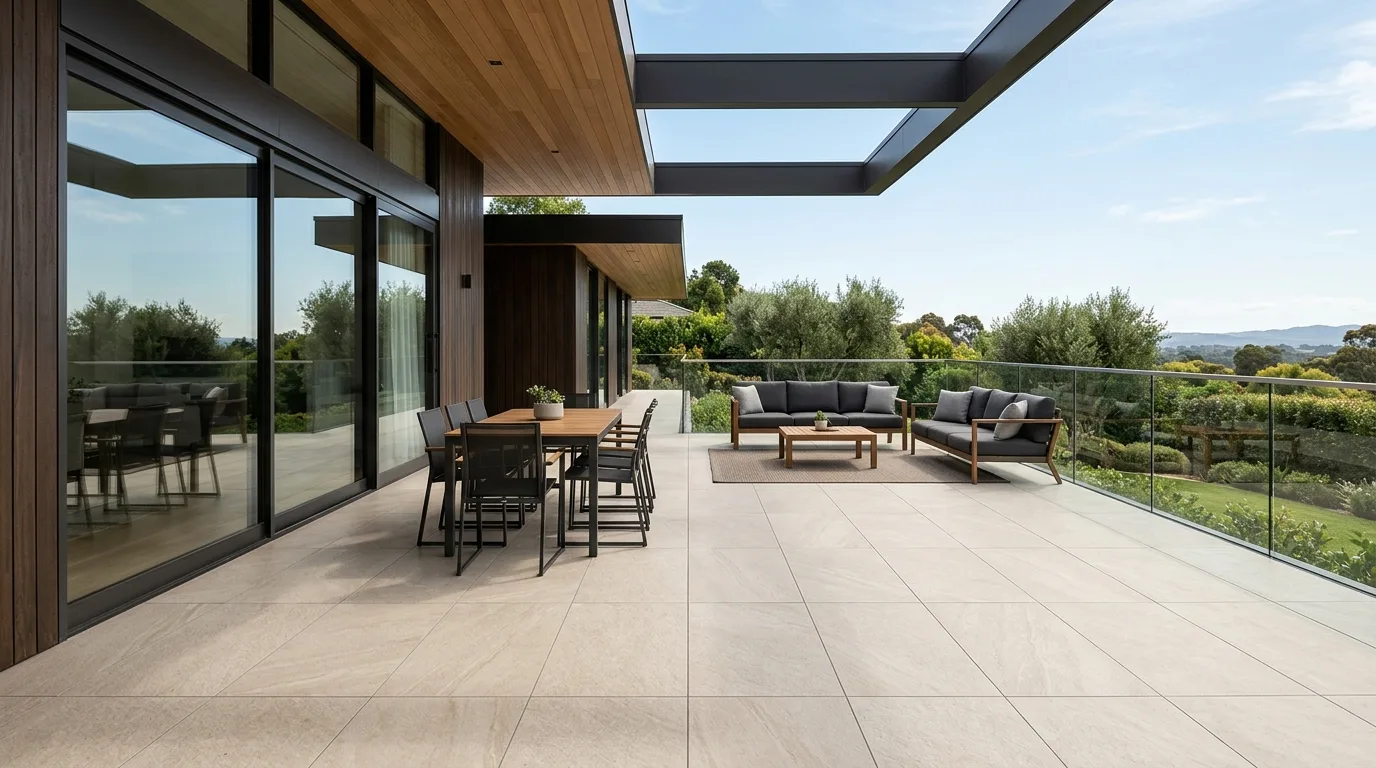
Format affects the character and practical installation of outdoor paving. Large-format pieces can create broad visual fields, while smaller modules introduce more joints and rhythm. Natural stone may be available in tiles, slabs, setts or other formats depending on the supplier and material. Porcelain paving is also available in multiple dimensions, but the exact range depends on the product.
Before selecting either category, place the proposed dimensions into the actual site plan. Check edges, steps, drains, door thresholds, pool coping and transitions to planting. A visually attractive format can become inefficient if it creates many awkward cuts around fixed elements.
Consider Surface Finish and Texture
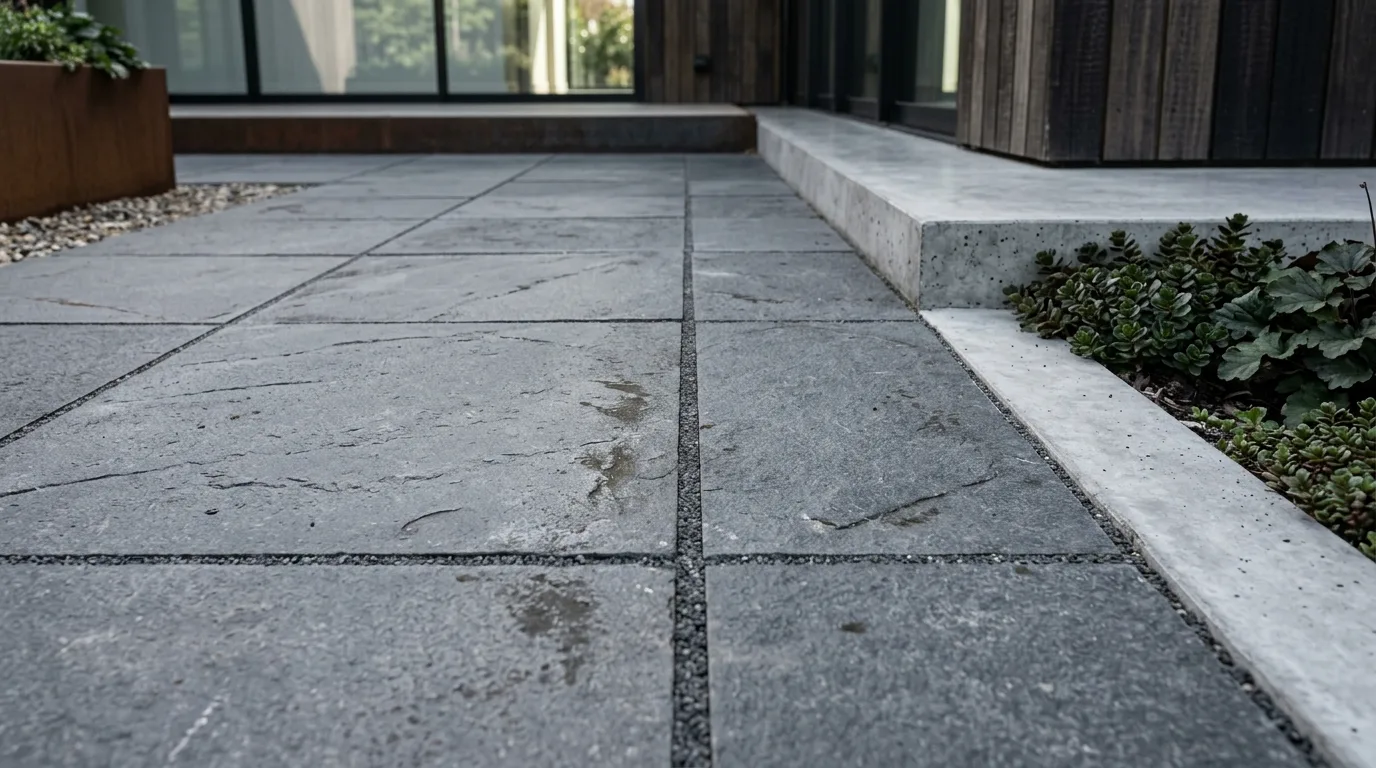
Surface character matters particularly outdoors because paving is experienced visually and underfoot. Natural stone finishes can range from relatively smooth to more textured surfaces, depending on the stone and processing method. Porcelain paving can also be manufactured with textured surfaces intended to reproduce the character of stone or other materials.
Do not select a finish from a name alone. Review the actual product and consider how it looks in both dry and wet conditions. Texture, light reflection, joint width and surrounding materials can significantly change the appearance of a completed terrace or walkway.
Drainage and Installation Are Separate From the Material Choice
Neither natural stone nor porcelain automatically solves drainage or installation requirements. Outdoor paving is part of a larger system that includes the substrate, falls, joints, drainage points and site conditions. The correct construction method depends on the project and should be designed by the responsible construction professionals.
For sloped areas, pool surrounds and large terraces, coordinate the paving layout with drainage before ordering. Confirm how edges, movement joints, thresholds and changes in level will be handled. This prevents the material choice from being made independently of the construction system.
Natural Variation Versus Manufactured Consistency
One of the clearest differences is the way variation is managed. Natural stone is expected to contain some degree of variation because it comes from geological material. A project can use samples, sorting and agreed acceptance criteria to establish an appropriate range, but the finished surface should not be expected to behave exactly like a manufactured print.
Porcelain offers a different type of consistency. The product is manufactured according to a defined collection, although printed patterns can still repeat. Buyers should review multiple pieces where possible to understand how the pattern behaves across a larger paved area.
Maintenance Should Be Evaluated by Product
Outdoor paving is exposed to dirt, leaves, rainwater, dust and organic matter. Cleaning requirements depend on the actual product, finish, joint system and environment. Natural stone may have material-specific care or sealing guidance, while porcelain also requires suitable cleaning of the surface and joints.
Instead of assuming that one category is maintenance-free or maintenance-heavy, request the care instructions for the exact product being considered. This produces a more realistic comparison and helps the owner understand the routine required after installation.
Think About Design Continuity
The relationship between the paving and the rest of the project can be more important than the material category itself. Natural stone can connect an outdoor terrace to a stone facade, garden wall or pool surround. Porcelain can similarly coordinate with contemporary architectural finishes and can provide a controlled palette across multiple zones.
Look at the paving beside walls, timber, planting, pool water, furniture and interior flooring. A good material comparison should include the complete palette rather than judging the paving in isolation.
Consider the Project's Procurement Process
For a small residential project, material selection may be straightforward. For a larger commercial or international project, procurement can involve samples, technical documents, production schedules, packaging, shipping and quality inspection.
Natural stone orders should clearly identify the stone, format, thickness, finish, quantity and acceptable variation. Porcelain orders should identify the manufacturer or product collection, dimensions, thickness, finish and required quantity. Keeping these references precise makes quotations easier to compare.
Budget the Complete Installation
A material unit price is only one part of the outdoor paving budget. Include required quantities, cutting, waste, edge details, substrate preparation, installation, joints, packaging, delivery and any other project-specific work. The final cost can change substantially when a design uses unusual formats or complex geometry.
When comparing natural stone and porcelain, ask suppliers or contractors to quote against the same project scope. This avoids comparing a material-only number with a quotation that includes additional services.
Use Physical Samples Before Making the Decision
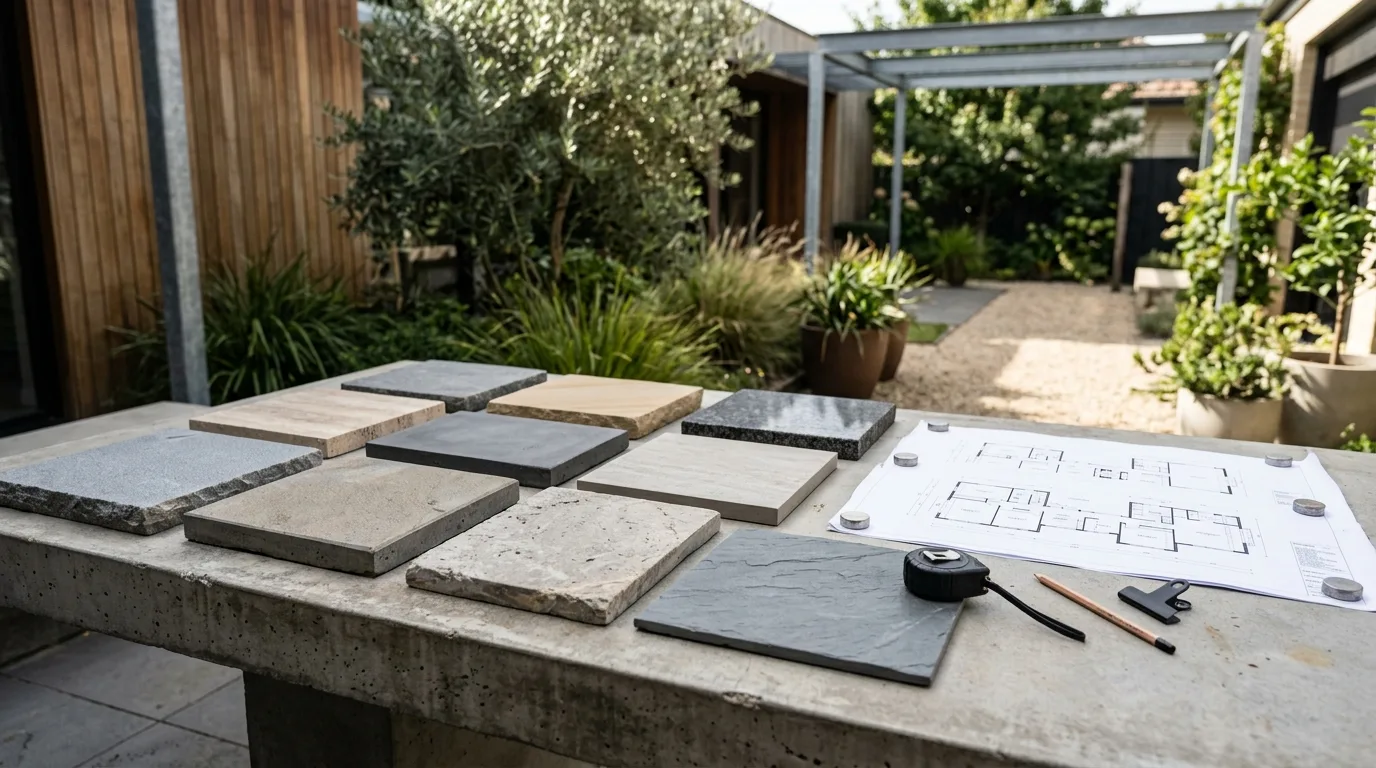
Physical samples are especially valuable for outdoor paving because daylight reveals texture and color differently from a digital image. Place samples beside the building materials and, when possible, view them under the site's actual light conditions.
For natural stone, several pieces can demonstrate the expected range of color and texture. For porcelain, multiple pieces can show pattern repetition and surface consistency. This simple comparison often reveals characteristics that are difficult to understand from a single photograph.
Questions to Ask Before Choosing
- What is the exact product and material category?
- Which formats and thicknesses are available?
- What finish is specified for the outdoor application?
- How does the surface look when dry and wet?
- What natural or manufactured variation should be expected?
- How will the paving work with drainage and site falls?
- What installation system is required?
- How will corners, steps, thresholds and pool edges be detailed?
- What cleaning and maintenance routine is recommended?
- What are the complete material, fabrication, delivery and installation costs?
Making a Clear Specification
Once the project team has compared the materials, document the decision in specific terms. Avoid a vague description such as “stone-look outdoor paving.” State whether the selected product is natural stone or porcelain, then identify the exact material, format, thickness, finish, quantity and application.
If natural stone is selected, include an approved sample and a realistic description of acceptable variation. If porcelain is selected, keep the exact product reference and collection information with the drawings. The goal is to ensure that the product ordered is the same product evaluated during design.
Final Takeaway
The comparison between natural stone or porcelain paving becomes clearer when it is based on project criteria rather than a generic claim that one material is always better. Consider material origin, appearance, variation, format, finish, drainage, installation, maintenance, design continuity, procurement and total cost. Then evaluate physical samples in the context of the actual architecture.
For an international project, keep the approved material reference connected to the quotation, drawings and purchase documentation. If the project uses natural stone, the supplier should also understand the expected visual range and required formats. With porcelain, the exact manufactured product and collection should remain clearly identified. A well-documented choice gives designers, buyers, suppliers and installers the same reference from the first sample through final installation.
The most reliable decision is therefore the one that fits the project's actual conditions and design objectives. Neither category should be judged from a photograph or unit price alone. A complete evaluation of the finished application will provide a much clearer basis for selecting the paving material.
Review the Decision at Full Project Scale
A final review should happen before the purchase order is released, especially when the paving covers a large terrace or several outdoor zones. Compare the proposed layout with the architectural drawings and verify that the selected format works around fixed elements. Check that the visual character seen in the sample remains appropriate when repeated over a larger area.
For natural stone, discuss how pieces will be selected and arranged during installation. For porcelain, review how the manufactured pattern repeats across adjacent pieces. In both cases, the layout should be considered part of the design rather than something left entirely to the installation stage.
Keep the Construction Team Involved
Architects and designers may establish the visual direction, but installers and construction professionals can identify practical issues involving substrates, drainage, movement, joints and site access. Bringing those questions into the selection process can prevent a material from being approved before its installation method is understood.
This is particularly important for outdoor paving because the finished surface has to work with the surrounding landscape and building. A clear material choice supported by a clear construction detail is more useful than a visually appealing selection without an installation plan.