
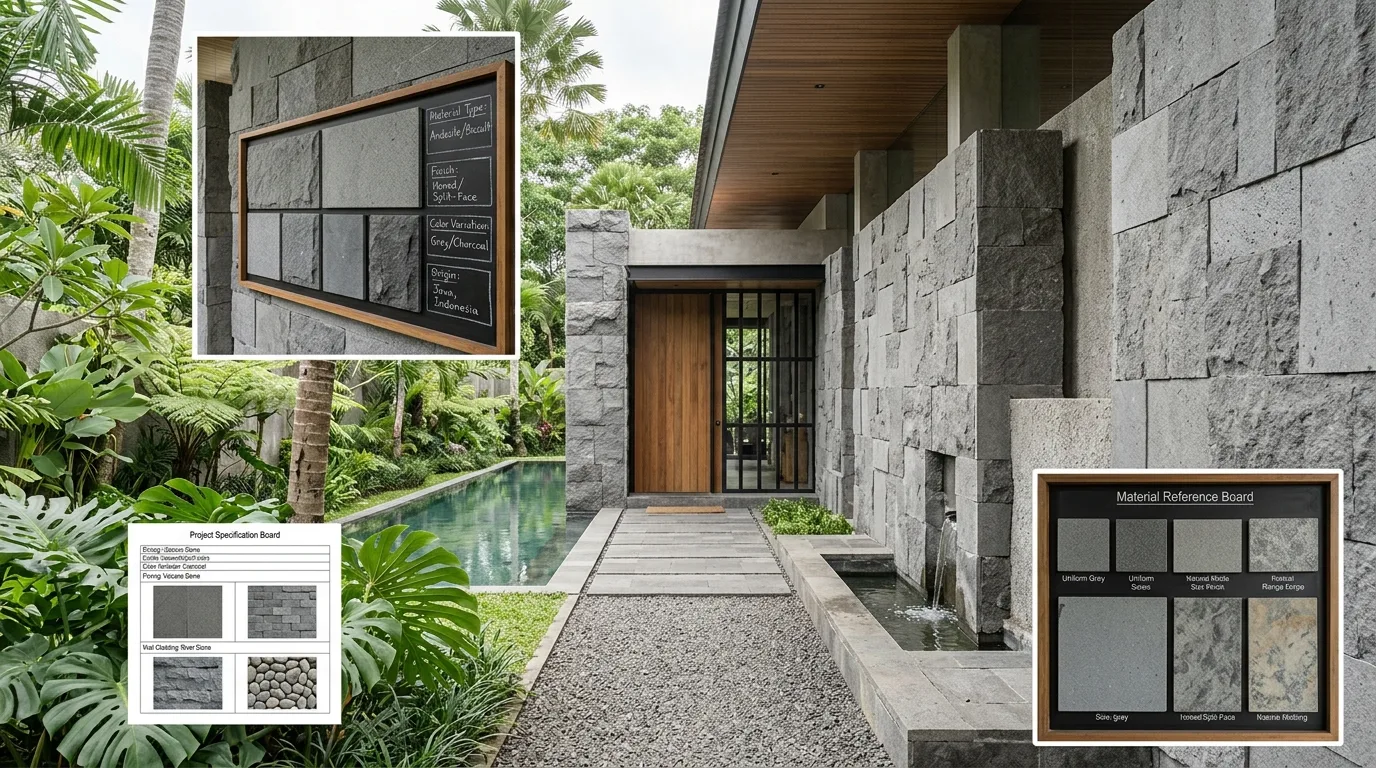
A specification should state the stone product clearly enough that the project team knows what is being purchased. Include material name, source information where relevant, color range and any approved sample reference. The primary question behind natural stone specifications is therefore best answered through the actual project conditions, not through a generic material label.
Identify the material precisely
A specification should state the stone product clearly enough that the project team knows what is being purchased. Include material name, source information where relevant, color range and any approved sample reference.

Define dimensions and thickness
State tile or slab dimensions, thickness and dimensional tolerances appropriate to the application. If several formats are required, list them separately rather than describing the project with one generic size.
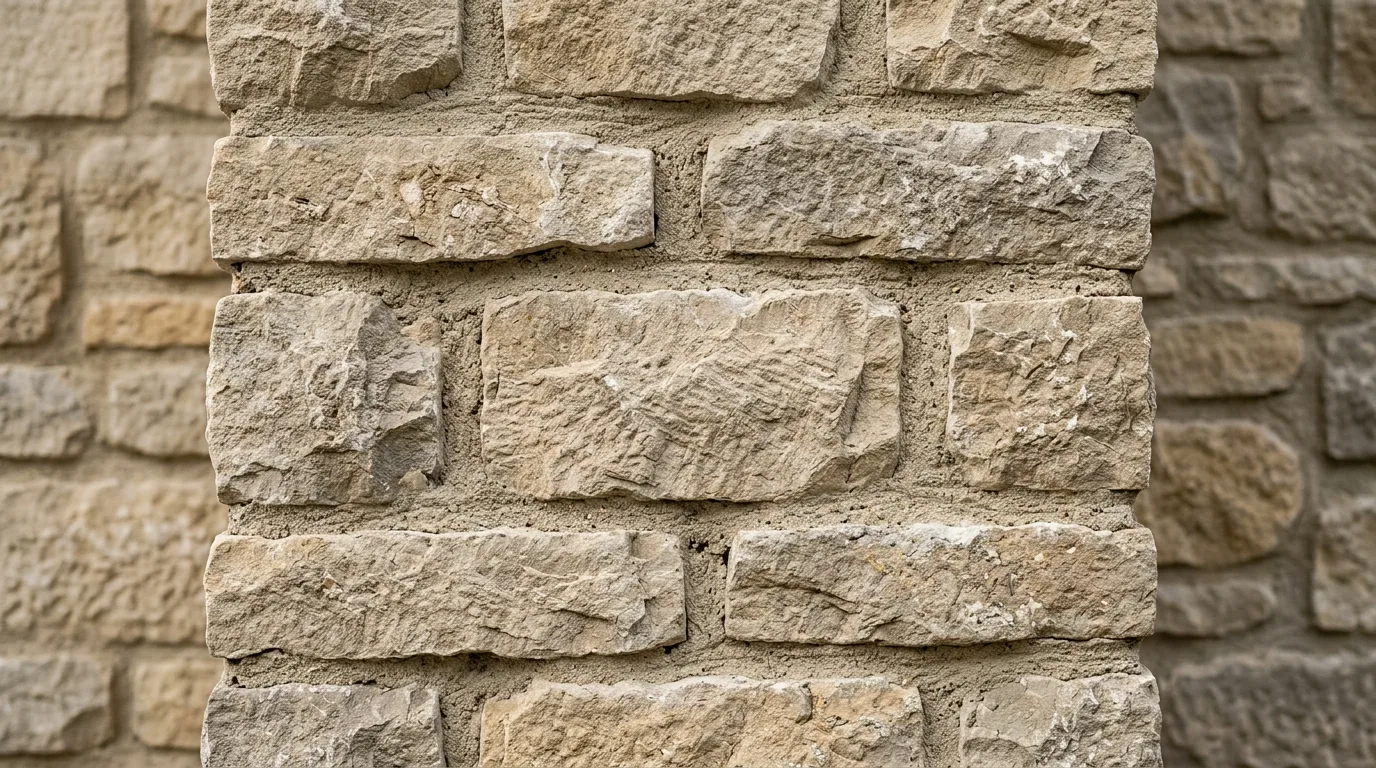
Describe the finish
Finish terminology should be clear and tied to the actual product. If texture or visual variation matters, include photographs, samples or a mock-up requirement instead of relying on adjectives such as premium or high quality.

Set visual expectations
Natural stone varies. The specification can define an acceptable range for color, veining, texture, holes or other characteristic features. The objective is to establish expectations without pretending that natural material can be perfectly uniform.
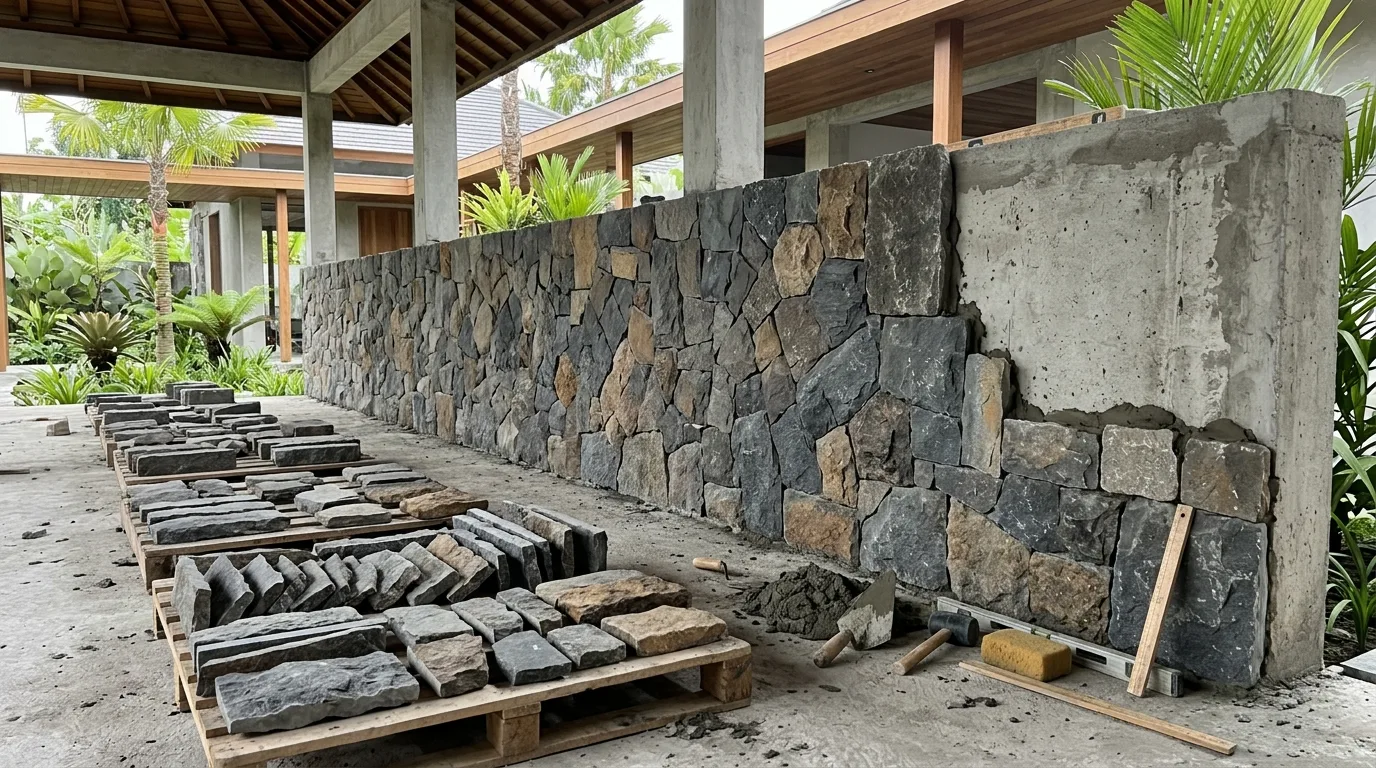
Detail installation interfaces
Include the intended application, substrate assumptions, joint approach, edge treatment and relevant transitions. Technical installation requirements should be coordinated with the responsible architect and contractor.
Add sampling and approval stages
State when samples, mock-ups or production references need approval. For large projects, define whether approval applies to one sample, a range of samples or a representative mock-up.
Include quality and delivery requirements
Document inspection points, quantity, packaging, labeling and delivery responsibilities. For international projects, keep material readiness separate from transit and destination delivery assumptions.
Make the document usable
A strong specification should be readable by procurement, production and installation teams. Use tables, drawings and sample references where they remove ambiguity. The document should answer what is being supplied, where it goes and how conformity will be checked.
A practical project checklist
Material identity
Dimensions and thickness
Finish
Acceptable variation
Installation interfaces
Sample approval
Quality checks
Packing and delivery
Questions buyers and designers should ask
What information should appear in a stone specification? Material identity, dimensions, thickness, finish, visual expectations, installation interfaces, approvals, quality and delivery should be clear.
Final takeaway
The most reliable approach to natural stone specifications is to define the application, verify the actual material or finish, review a physical reference, and document the approved specification before production. Natural stone is a real material with variation, while manufactured alternatives and different finishing processes can behave differently. Clear information at the selection stage helps designers, buyers, suppliers and installers work from the same expectation.
For an international project, continue that clarity through packing, labeling and delivery documentation. Keep the approved sample, drawings and product information together so the delivered material can be checked against the intended scope. This is especially useful when a project is large, phased or being coordinated across different teams.
A good material decision is therefore not simply about choosing a stone that looks attractive. It is about choosing a product whose appearance, format, finish, installation requirements and maintenance expectations make sense for the place where it will be used.
Dimensions should be separated from visual descriptions. Words such as large, thin or textured are open to interpretation, while a measured size, thickness and finish provide a production reference. If tolerances matter, state them explicitly and confirm how they will be inspected.
The specification should also identify where the material will be installed. A stone listed without an application can create confusion when the same project contains floors, walls, pool areas or landscape elements. Each location should have its own relevant requirements.
For repeated areas, numbering the stone types can make procurement easier. For example, a project may identify one product for an entrance floor and another for a feature wall. The naming system should remain consistent across drawings, schedules, purchase orders and packing labels.
Before release, have the project team check the specification against the latest drawings. This final coordination step can reveal a changed dimension, missing finish or quantity difference before production begins.
A specification is most useful when another person can read it without needing the original designer present. Avoid relying on phrases such as match the image, premium finish or similar color. Instead, connect written descriptions to samples, drawings and measured dimensions. Where natural variation is important, say what is expected and where it should be reviewed. This makes the document useful to procurement and quality-control teams as well as the design team. It also creates a stronger record if the project is delivered in several production batches.
Include commercial information only where it helps identify the supply scope. Quantity, packing, delivery responsibility and inspection stages can be useful parts of the procurement package. The technical specification should remain clear enough that a supplier can price the requirement and a site team can verify the delivery. When the document connects drawings, samples and written requirements, it becomes a practical control document rather than a collection of descriptive words.
Keeping the project reference clear
Once the material decision is made, keep the approved reference connected to every later stage. Record the exact product, finish, format, sample and intended application, then share that information with the people responsible for purchasing, production, inspection and installation. For natural stone specifications, this simple documentation step helps prevent a design decision from becoming distorted as the project moves from concept to quotation and finally to the finished site.
It is also useful to keep photographs of approved samples and completed installations. They can support future repairs, additional phases and quality discussions. Natural materials should be judged against realistic expectations of variation, while manufactured products should be identified by their exact product references. Clear records make both approaches easier to manage.