
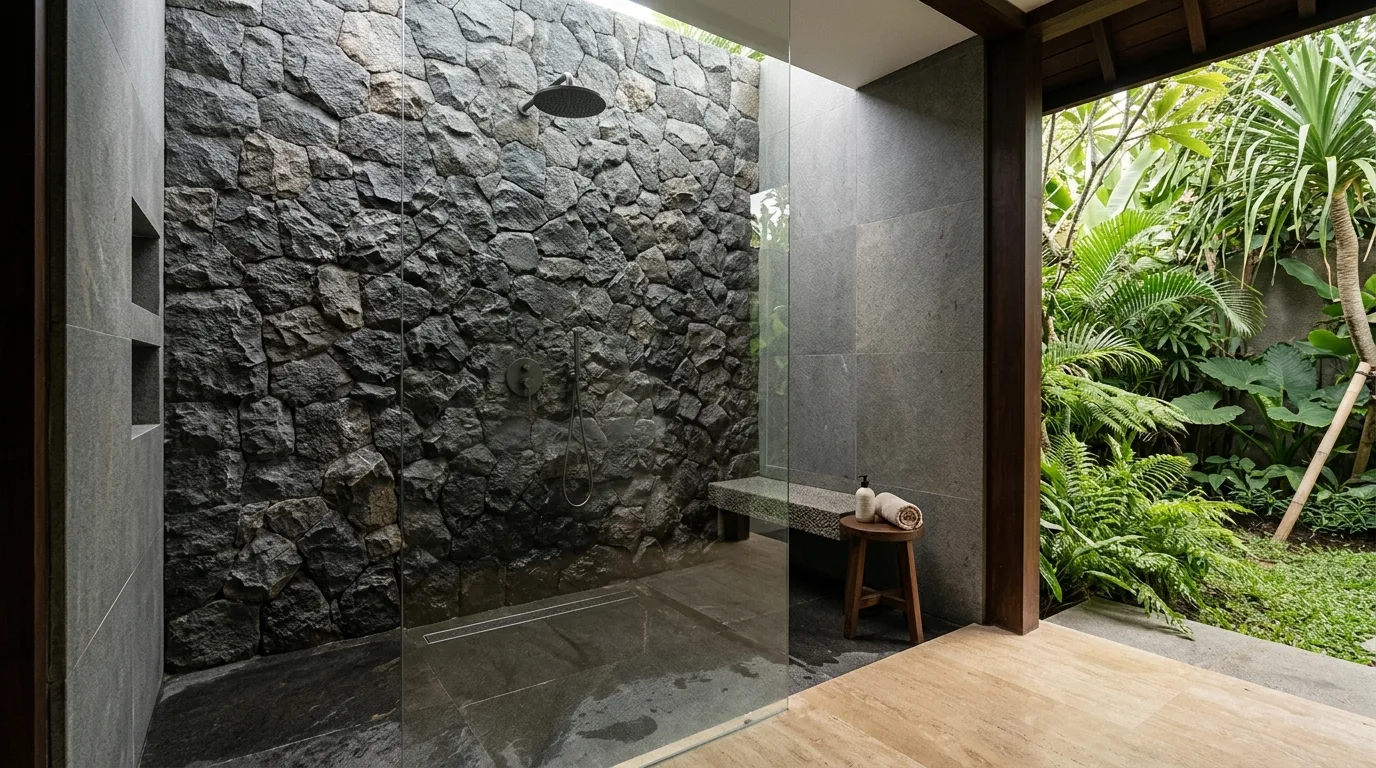
A natural stone shower combines a demanding wet environment with a highly visible architectural surface. The design therefore needs to solve practical details and visual composition at the same time. Tile size, surface texture, drainage, corners, niches and maintenance all affect the finished result.
Map the shower surfaces
Treat the floor, walls, niche, seat and threshold as related but distinct surfaces. They do not necessarily need identical formats. The floor may require a different texture or smaller module, while walls can use larger pieces.
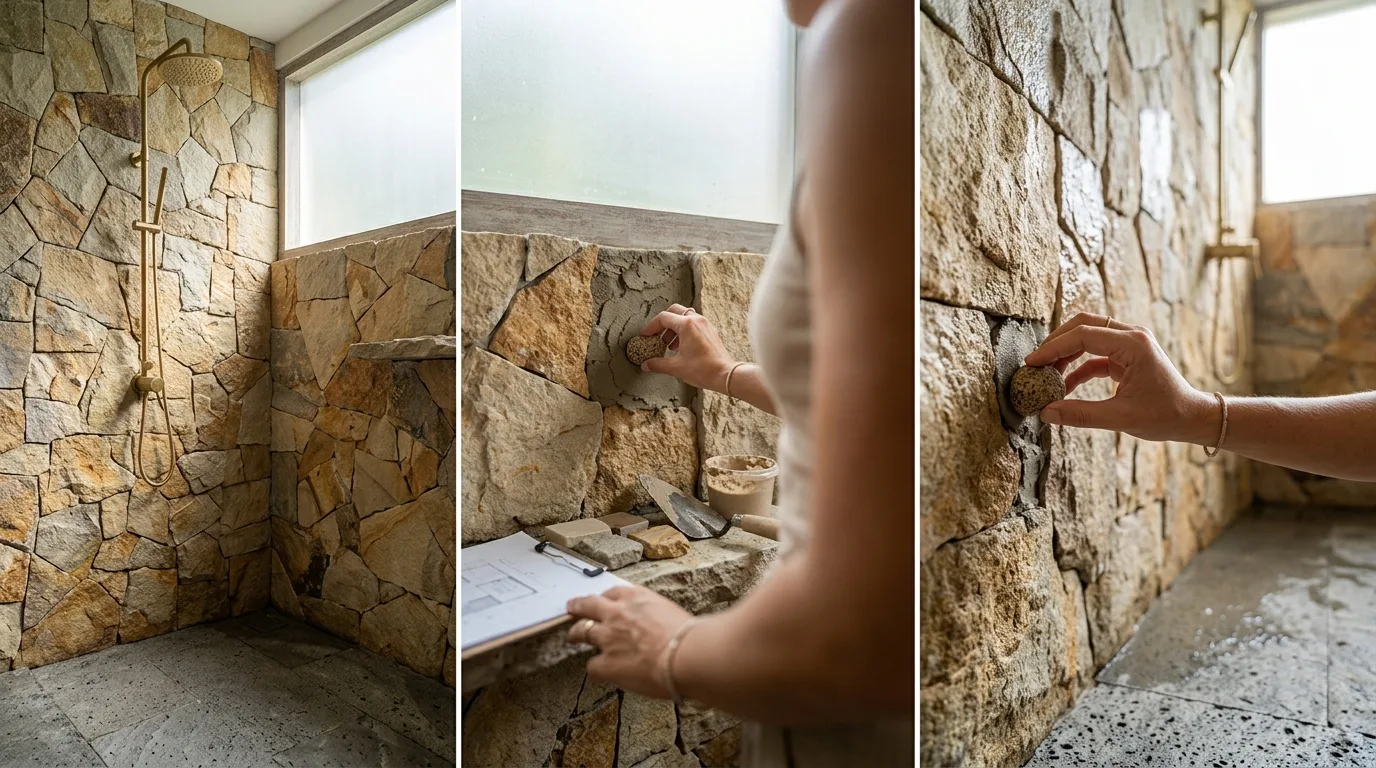
Choose a suitable surface character
In a shower, surface texture affects both appearance and everyday use. Very pronounced relief can make cleaning more involved, while an overly smooth surface may not deliver the intended tactile character. Discuss the finish with the installer.
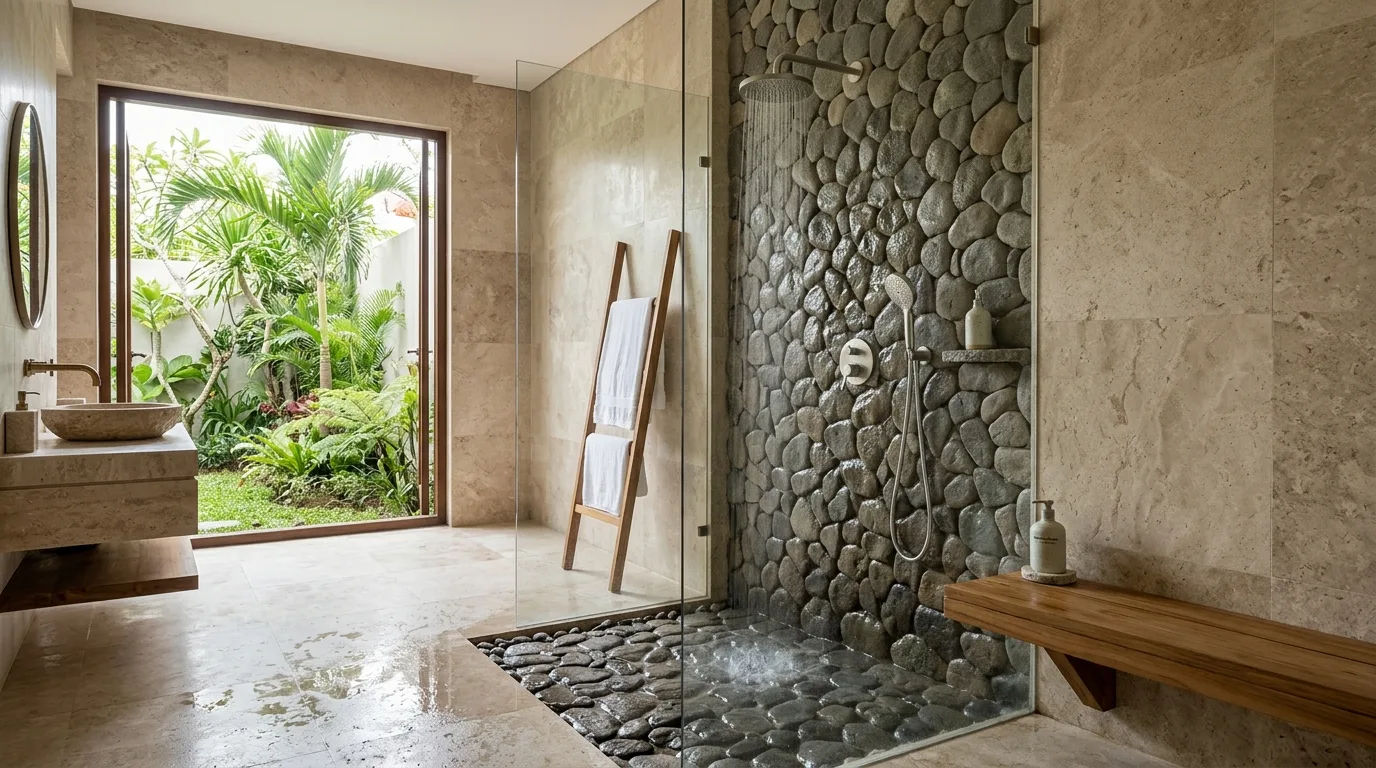
Plan drainage before the stone
The drain location and shower slope influence tile cuts and joint direction. Linear drains can create different layout possibilities from central drains. The stone pattern should be coordinated with these fixed points.
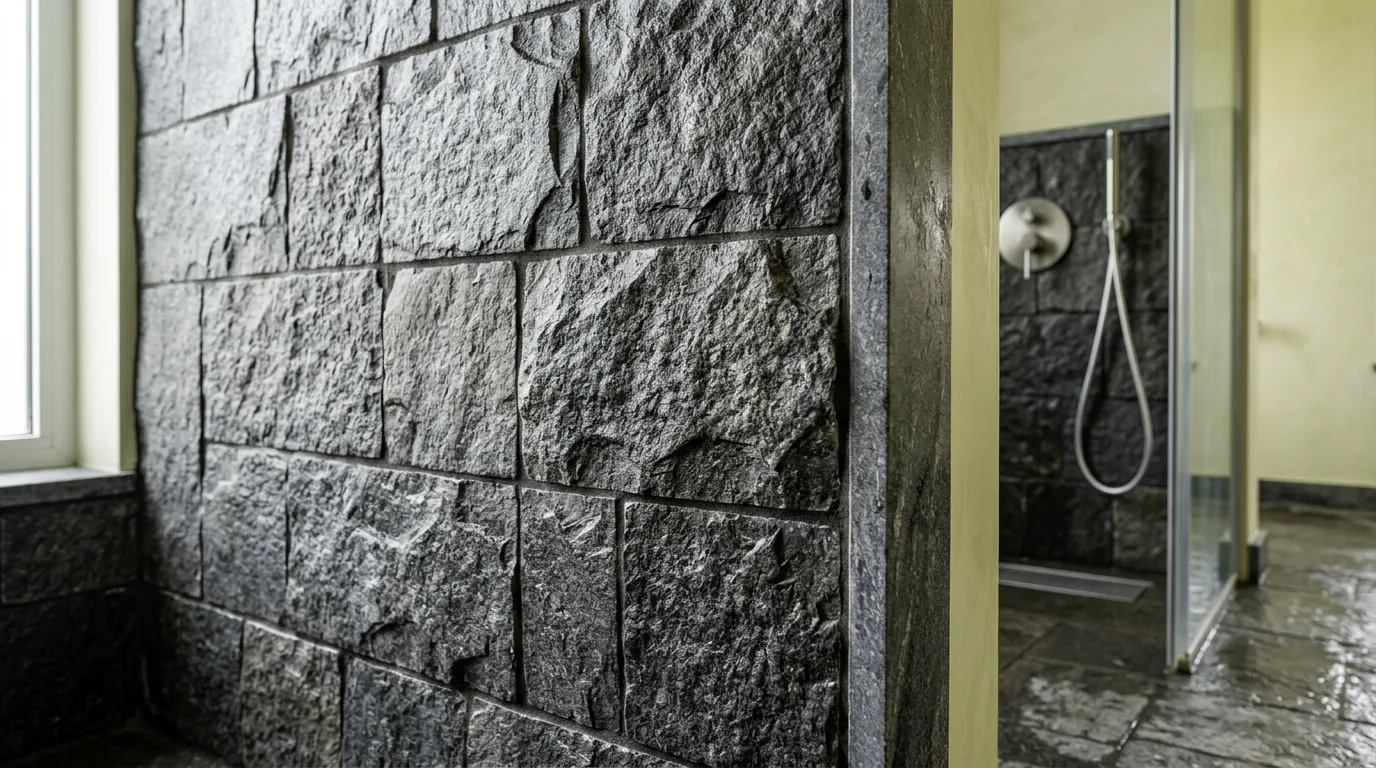
Corners and niches
Inside corners should have a clear waterproofing and finishing detail. Niches require accurate dimensions so the stone pieces fit cleanly. Avoid leaving these decisions until installation.
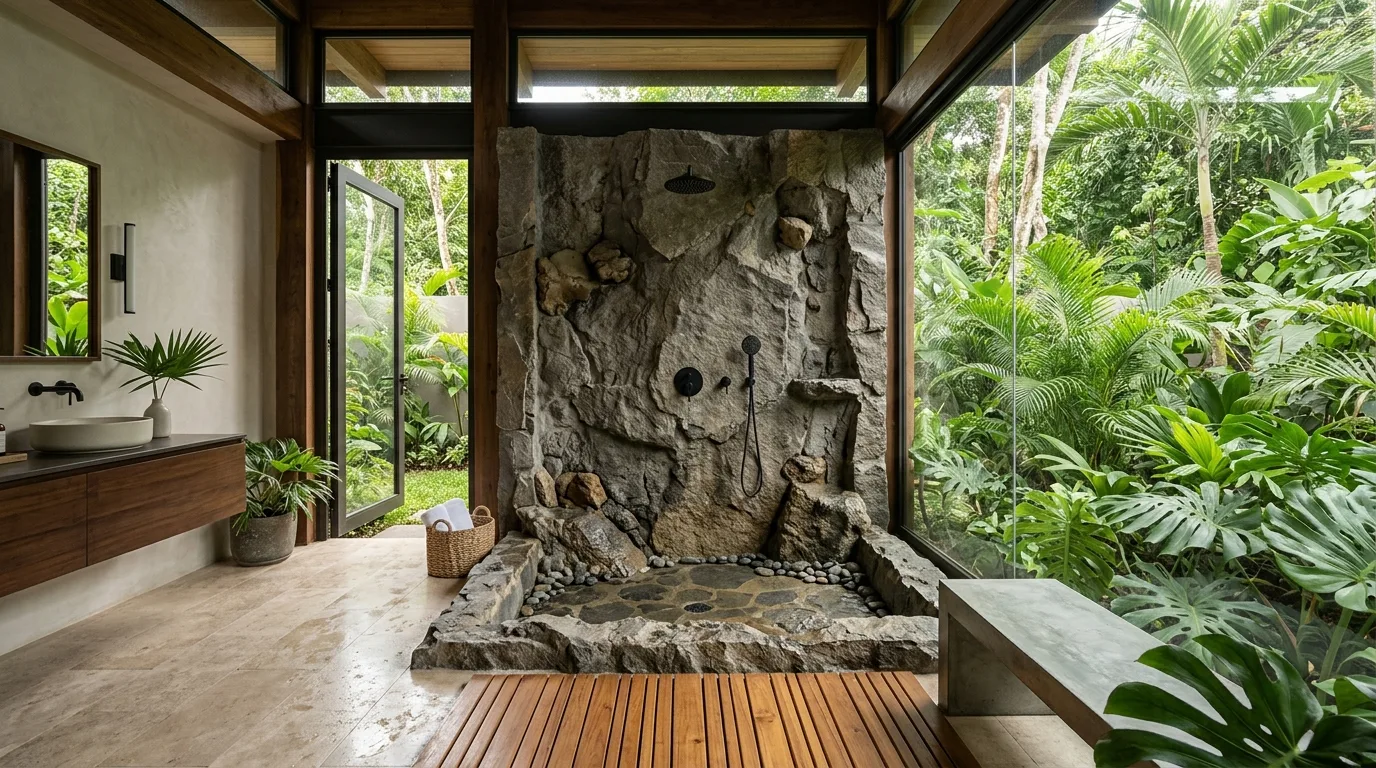
Shower seat and ledges
If the design includes a seat, shelf or ledge, consider how the stone terminates at exposed edges and how water is directed. These details are small but highly visible.
Maintenance is part of selection
Ask how the proposed stone and finish should be cleaned and maintained in a wet environment. Confirm sealing requirements from the stone supplier and installation system manufacturer rather than assuming every natural stone behaves identically.
Sample the complete assembly
Where possible, review a sample of the stone with the proposed grout and finish. Joint color can change the apparent tone of the surface. Lighting also affects how texture is perceived.
A coordinated shower specification
Record stone type, wall and floor formats, finish, thickness, joint approach, drainage layout, niche dimensions, thresholds, sample approval and maintenance guidance. Good documentation makes the shower easier to build and easier to maintain.
Key points to include in the project brief
- Surface: Floor — Drainage, texture, underfoot use.
- Surface: Walls — Scale, composition, cleaning.
- Detail: Niche/seat — Corners, edges, water management.
Questions to answer before ordering
What should be planned before installing a natural stone shower? Plan drainage, surface finish, tile scale, corners, niches, thresholds, waterproofing interfaces and maintenance before final installation.
Final takeaway
The right way to approach natural stone shower is to connect design intent with a specific application and a clear specification. Natural stone is a variable material, so samples, dimensions, finish, installation details and maintenance expectations should be agreed before production. For project sourcing, the same clarity should continue through quality control, packing and delivery.
Wall-to-floor coordination
The floor and wall do not need to use the same tile size. A smaller floor module can handle drainage geometry, while larger wall pieces create a calmer vertical field. What matters is that the colors and textures belong to a coherent palette.
Waterproofing comes first
Natural stone is a finish, not a substitute for a properly designed wet-area system. The shower build-up, waterproofing, falls and drainage should be resolved by the responsible construction professionals before the stone is installed.
Control the niche detail
A niche can be one of the most visible small details in a shower. Decide whether the stone continues through the niche, changes direction or uses a contrasting material. Consistent edge treatment makes the niche feel designed rather than simply cut into the wall.
Maintenance expectations
Before approval, ask for material-specific cleaning and sealing guidance. Owners should know which products are appropriate and which practices may damage the finish. This is especially important where the stone has a textured or sensitive surface.
A shower should also be designed around the user's cleaning routine. If the shower is used frequently, surfaces that are difficult to reach or have deep recesses may demand more attention. A well-resolved stone shower keeps drainage accessible, avoids unnecessary ledges and uses joints that are easy to inspect. These practical choices do not have to reduce the visual quality of the space. In many cases, a simpler detailing strategy allows the natural stone itself to become the main architectural feature.
A shower should also be designed around the user's cleaning routine. If the shower is used frequently, surfaces that are difficult to reach or have deep recesses may demand more attention. A well-resolved stone shower keeps drainage accessible, avoids unnecessary ledges and uses joints that are easy to inspect. These practical choices do not have to reduce the visual quality of the space. In many cases, a simpler detailing strategy allows the natural stone itself to become the main architectural feature.
A shower should also be designed around the user's cleaning routine. If the shower is used frequently, surfaces that are difficult to reach or have deep recesses may demand more attention. A well-resolved stone shower keeps drainage accessible, avoids unnecessary ledges and uses joints that are easy to inspect. These practical choices do not have to reduce the visual quality of the space. In many cases, a simpler detailing strategy allows the natural stone itself to become the main architectural feature.
A shower should also be designed around the user's cleaning routine. If the shower is used frequently, surfaces that are difficult to reach or have deep recesses may demand more attention. A well-resolved stone shower keeps drainage accessible, avoids unnecessary ledges and uses joints that are easy to inspect. These practical choices do not have to reduce the visual quality of the space. In many cases, a simpler detailing strategy allows the natural stone itself to become the main architectural feature.
A shower should also be designed around the user's cleaning routine. If the shower is used frequently, surfaces that are difficult to reach or have deep recesses may demand more attention. A well-resolved stone shower keeps drainage accessible, avoids unnecessary ledges and uses joints that are easy to inspect. These practical choices do not have to reduce the visual quality of the space. In many cases, a simpler detailing strategy allows the natural stone itself to become the main architectural feature.
Before the specification is finalized
Because every shower is different, the final specification should be reviewed with the installer responsible for the wet-area system. Stone selection, waterproofing, drainage and fixing cannot be separated completely. When these decisions are coordinated early, the visual design has a much better chance of surviving the practical realities of construction.
For project teams, this final review is a useful moment to confirm the approved sample, dimensions, finish, quantity, installation area and delivery assumptions. Keeping those decisions together gives the supplier, designer and contractor the same reference and makes later changes easier to track.
For larger projects, photograph and document the approved stone before installation. This provides a useful reference if several batches are produced. It also helps distinguish normal natural variation from a genuine mismatch with the agreed material specification.
Carefully.