
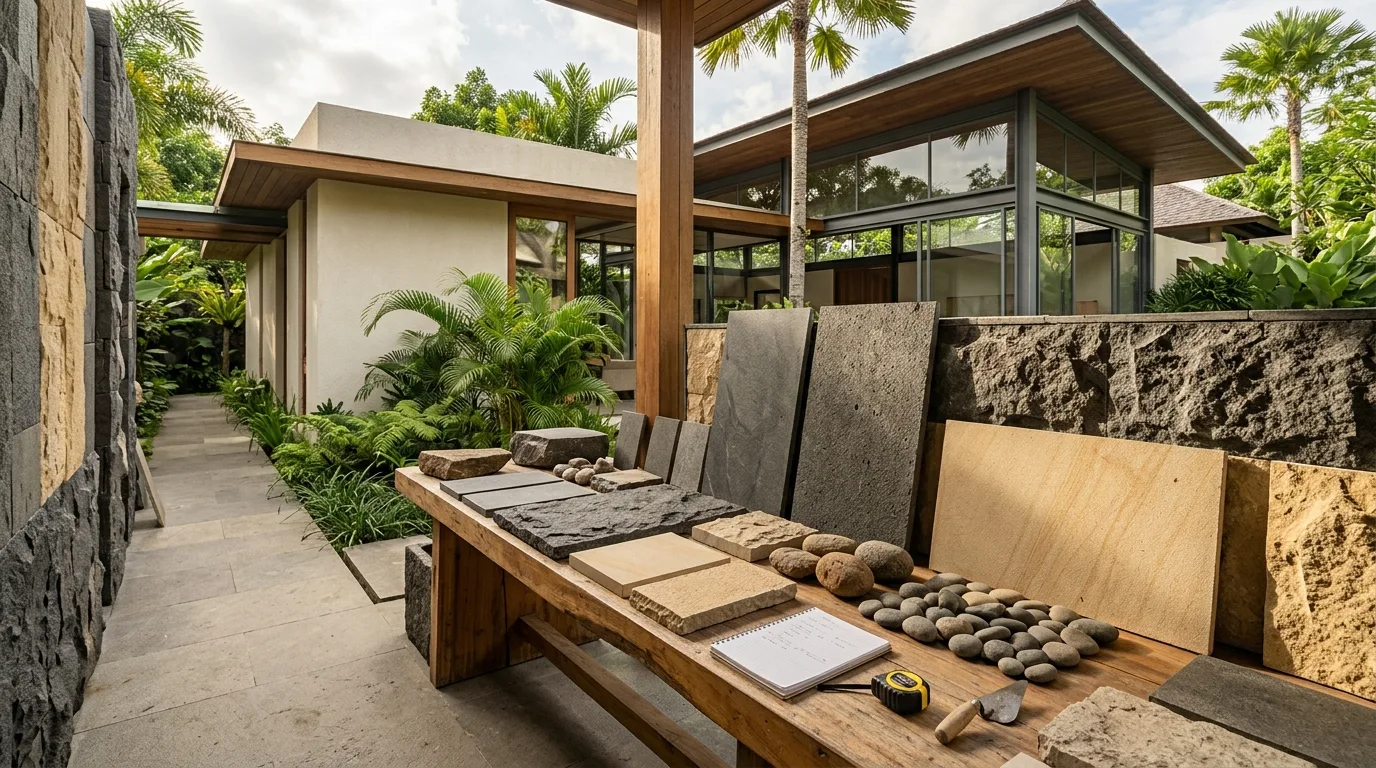
Natural stone selection becomes easier when the first question is where the material will be used. A bathroom floor, exterior wall, pool surround, kitchen surface and garden path have different conditions. Define traffic, moisture, exposure, maintenance and visual expectations before comparing individual stones. The primary question behind natural stone selection is therefore best answered through the actual project conditions, not through a generic material label.
Start with the application
Natural stone selection becomes easier when the first question is where the material will be used. A bathroom floor, exterior wall, pool surround, kitchen surface and garden path have different conditions. Define traffic, moisture, exposure, maintenance and visual expectations before comparing individual stones.
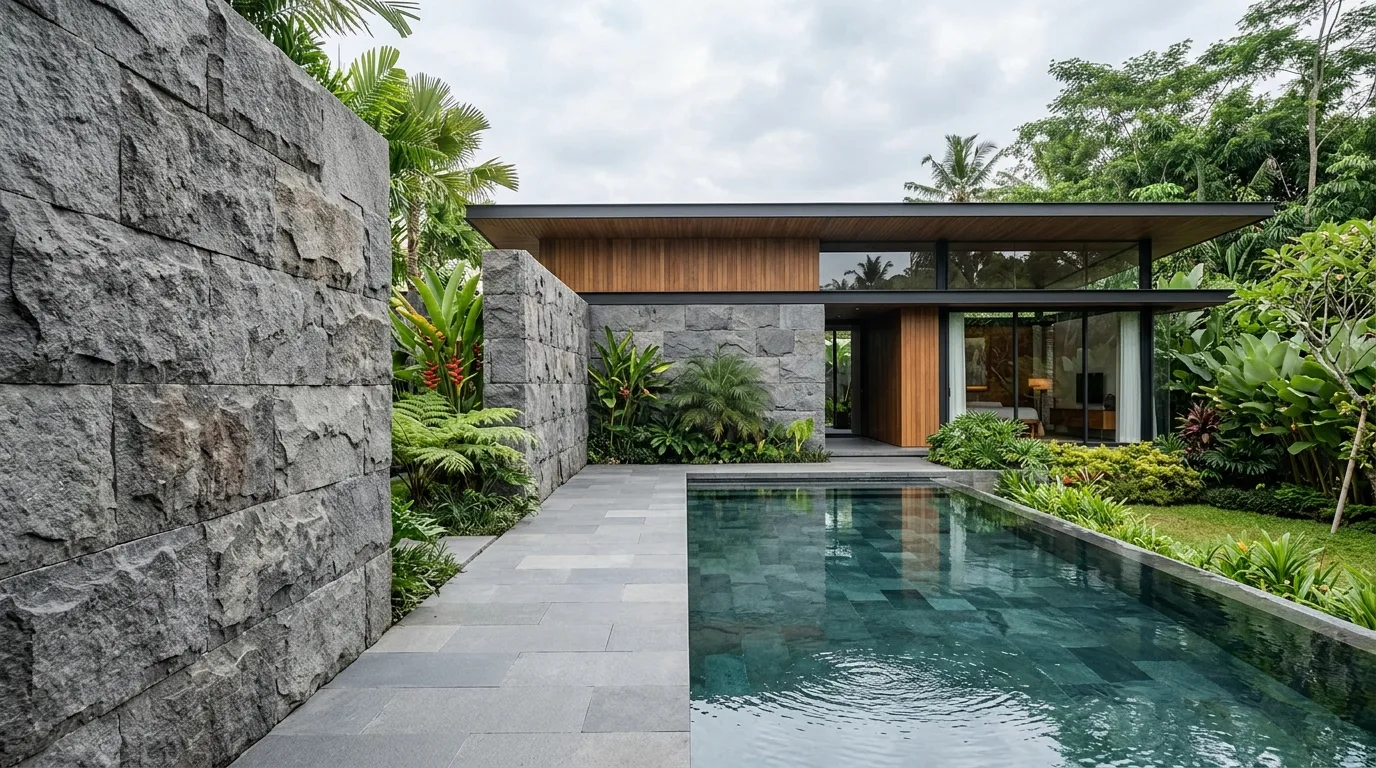
Define the visual brief
Record the desired color family, texture, variation, format and overall architectural character. Decide whether the stone should blend into the background or act as a feature. This keeps the search focused and prevents a project from accumulating unrelated samples.
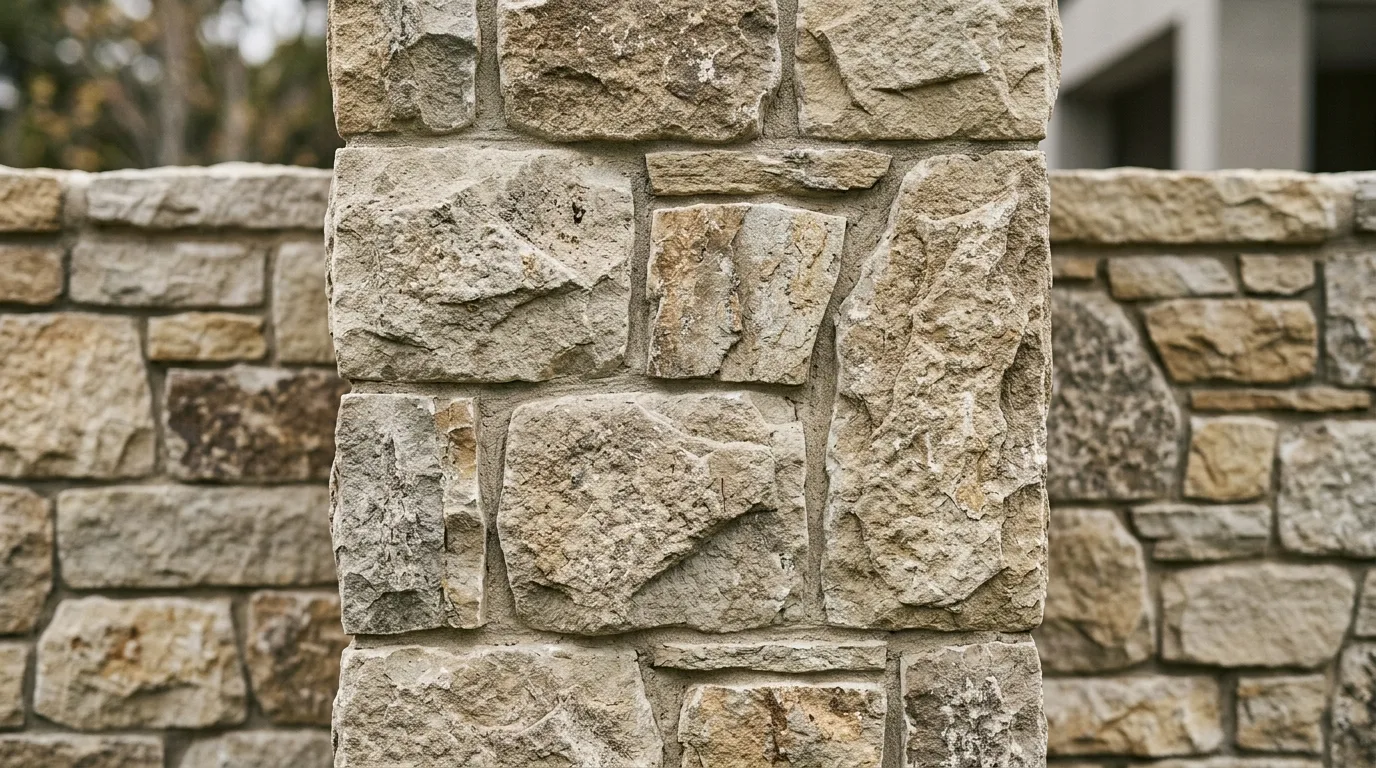
Compare material characteristics
Review the properties relevant to the application rather than looking for a universal best stone. Consider surface character, thickness, available formats, finish options, natural variation and expected maintenance. Ask the supplier which characteristics are inherent to the specific product.
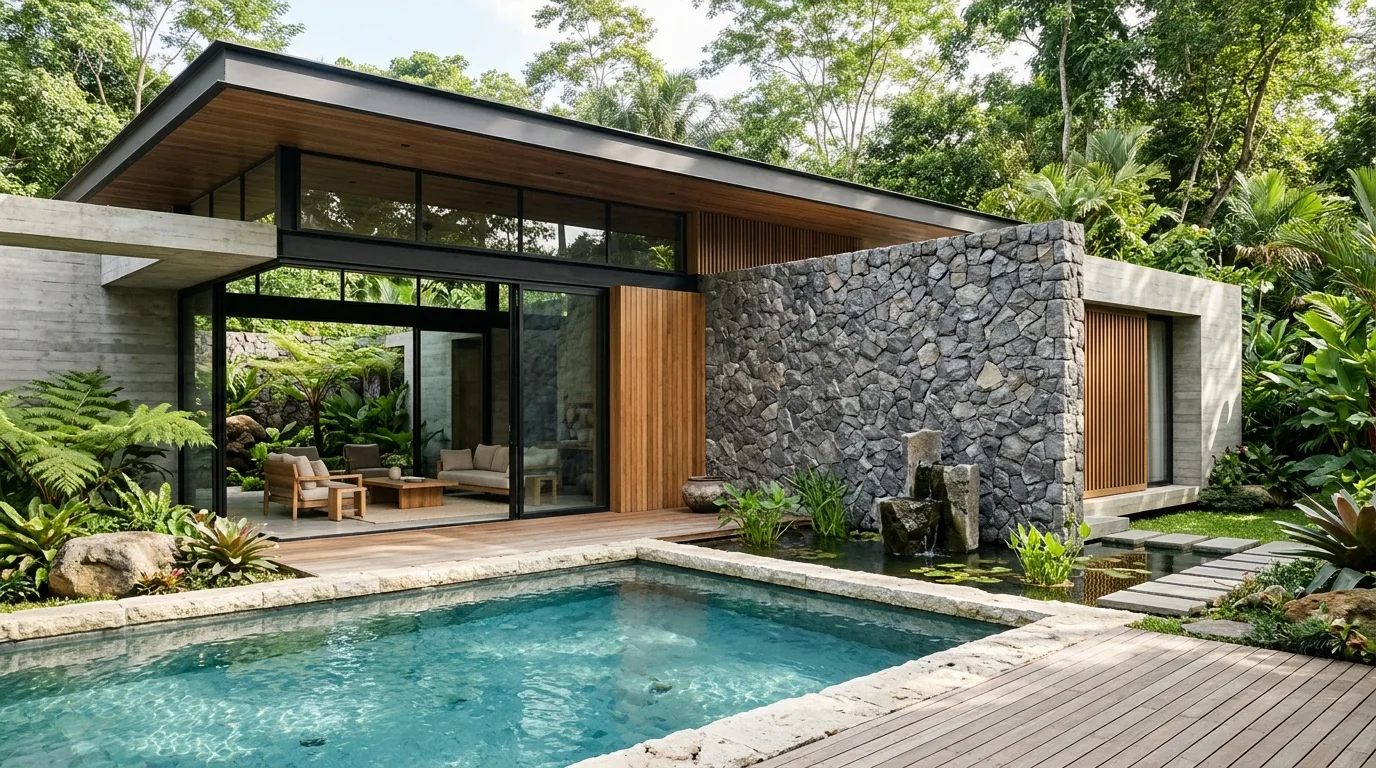
Check the finish and format
The same stone can look very different when processed into different formats or finishes. A floor may require one surface treatment while a wall uses another. Confirm the actual finished product rather than selecting a stone name alone.
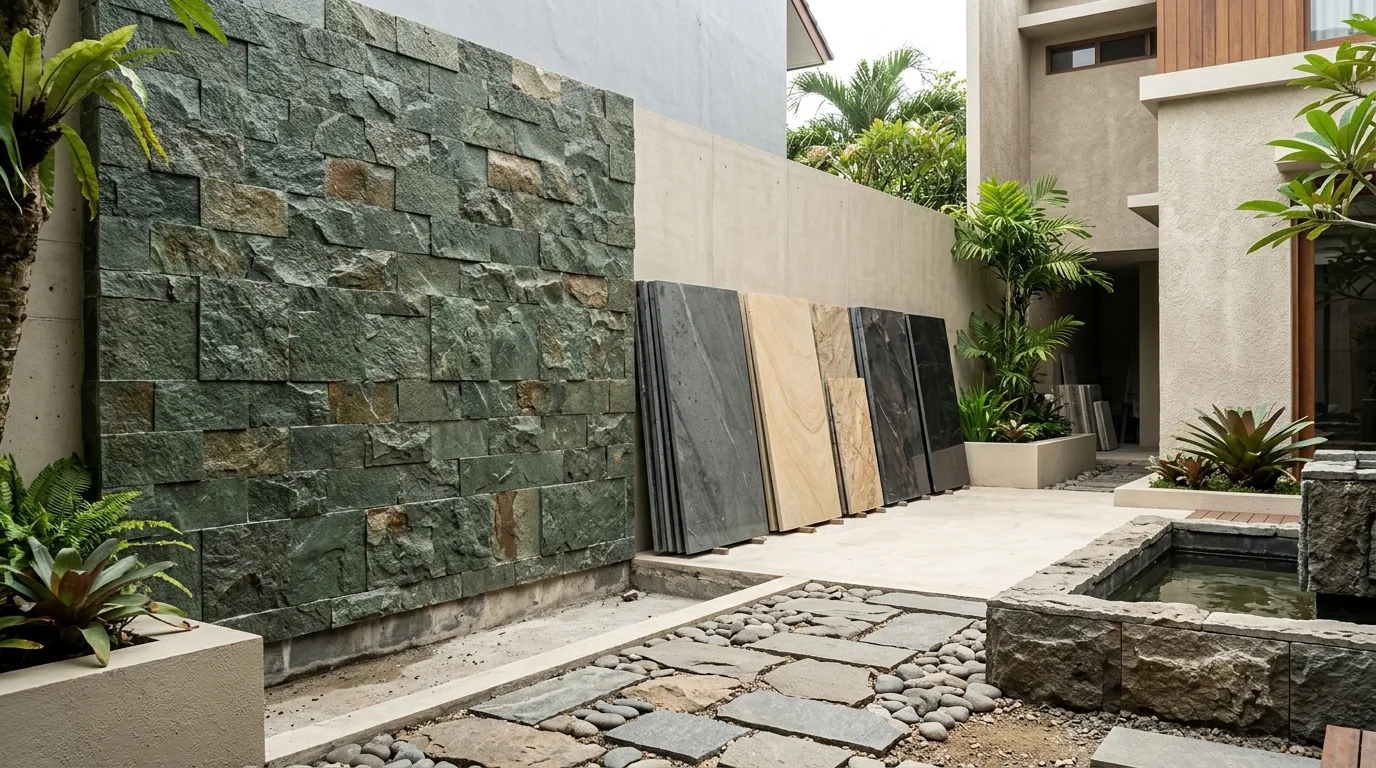
Use physical samples
Digital photographs are useful for narrowing choices, but natural variation is easier to understand from physical pieces. Review samples under the project's lighting and beside adjacent materials.
Test the layout
Place the sample into a drawing or mock-up. Look at joint rhythm, piece scale, edges and transitions. A material that looks excellent as a single sample may behave differently when repeated across a large area.
Review procurement reality
Check available dimensions, production capacity, minimum quantities, lead time, packing and delivery. A design decision is more useful when the required material can be produced and delivered within the project schedule.
Document the decision
Once the stone is selected, record the product, finish, dimensions, sample reference, acceptable variation and application. This creates a common reference for designers, contractors and suppliers.
A practical project checklist
- Application and site conditions
- Desired color and texture
- Format and finish
- Physical sample
- Layout and quantity
- Supplier capacity
- Delivery schedule
- Approved specification
Questions buyers and designers should ask
Which stone is appropriate for my application? Start with application, then compare appearance, finish, format, maintenance, availability and project logistics.
Final takeaway
The most reliable approach to natural stone selection is to define the application, verify the actual material or finish, review a physical reference, and document the approved specification before production. Natural stone is a real material with variation, while manufactured alternatives and different finishing processes can behave differently. Clear information at the selection stage helps designers, buyers, suppliers and installers work from the same expectation.
For an international project, continue that clarity through packing, labeling and delivery documentation. Keep the approved sample, drawings and product information together so the delivered material can be checked against the intended scope. This is especially useful when a project is large, phased or being coordinated across different teams.
A good material decision is therefore not simply about choosing a stone that looks attractive. It is about choosing a product whose appearance, format, finish, installation requirements and maintenance expectations make sense for the place where it will be used.
A useful way to organize a selection meeting is to separate non-negotiable requirements from preferences. Site exposure, drainage, dimensions and installation constraints may be fixed, while color, texture and pattern can remain flexible. This distinction helps the team make decisions without treating every design preference as equally critical.
For larger orders, selection should also consider production repeatability. A stone that looks excellent in one sample may need to be supplied across several batches. Discuss acceptable variation, sorting and approval procedures before committing to the full quantity.
The final selection should be traceable. Keep the approved sample, product description, dimensions, finish and application together with the purchase documentation. If questions arise during production or installation, the team can return to the same reference.
This process is particularly valuable for international sourcing because communication often happens through drawings, photographs and digital messages. A clear physical reference combined with written specifications reduces the room for different interpretations.
Selection should also account for procurement sequence. A designer may choose a material first and investigate supply later, but international projects benefit from checking availability early. Ask whether the stone is routinely produced, whether the requested dimensions are standard, whether special sorting is possible and how much lead time is normally required. These questions do not replace a formal quotation; they simply make the design decision more realistic. If the project is phased, consider whether the same material can reasonably be supplied for later phases and keep a documented reference for future orders.
Selection should also account for procurement sequence. A designer may choose a material first and investigate supply later, but international projects benefit from checking availability early. Ask whether the stone is routinely produced, whether the requested dimensions are standard, whether special sorting is possible and how much lead time is normally required. These questions do not replace a formal quotation; they simply make the design decision more realistic. If the project is phased, consider whether the same material can reasonably be supplied for later phases and keep a documented reference for future orders.
The selection stage is also the right time to discuss how natural variation will be distributed. A large project may not need identical pieces, but it does need a coherent overall field. Ask whether material will be sorted, mixed during installation or supplied as it comes from production. If certain areas are more visually important, identify them in the drawings. This allows procurement and installation teams to understand where appearance has the greatest priority.
The selection stage is also the right time to discuss how natural variation will be distributed. A large project may not need identical pieces, but it does need a coherent overall field. Ask whether material will be sorted, mixed during installation or supplied as it comes from production. If certain areas are more visually important, identify them in the drawings. This allows procurement and installation teams to understand where appearance has the greatest priority.
The selection stage is also the right time to discuss how natural variation will be distributed. A large project may not need identical pieces, but it does need a coherent overall field. Ask whether material will be sorted, mixed during installation or supplied as it comes from production. If certain areas are more visually important, identify them in the drawings. This allows procurement and installation teams to understand where appearance has the greatest priority.
Keeping the project reference clear
Once the material decision is made, keep the approved reference connected to every later stage. Record the exact product, finish, format, sample and intended application, then share that information with the people responsible for purchasing, production, inspection and installation. For natural stone selection, this simple documentation step helps prevent a design decision from becoming distorted as the project moves from concept to quotation and finally to the finished site.
It is also useful to keep photographs of approved samples and completed installations. They can support future repairs, additional phases and quality discussions. Natural materials should be judged against realistic expectations of variation, while manufactured products should be identified by their exact product references. Clear records make both approaches easier to manage.