
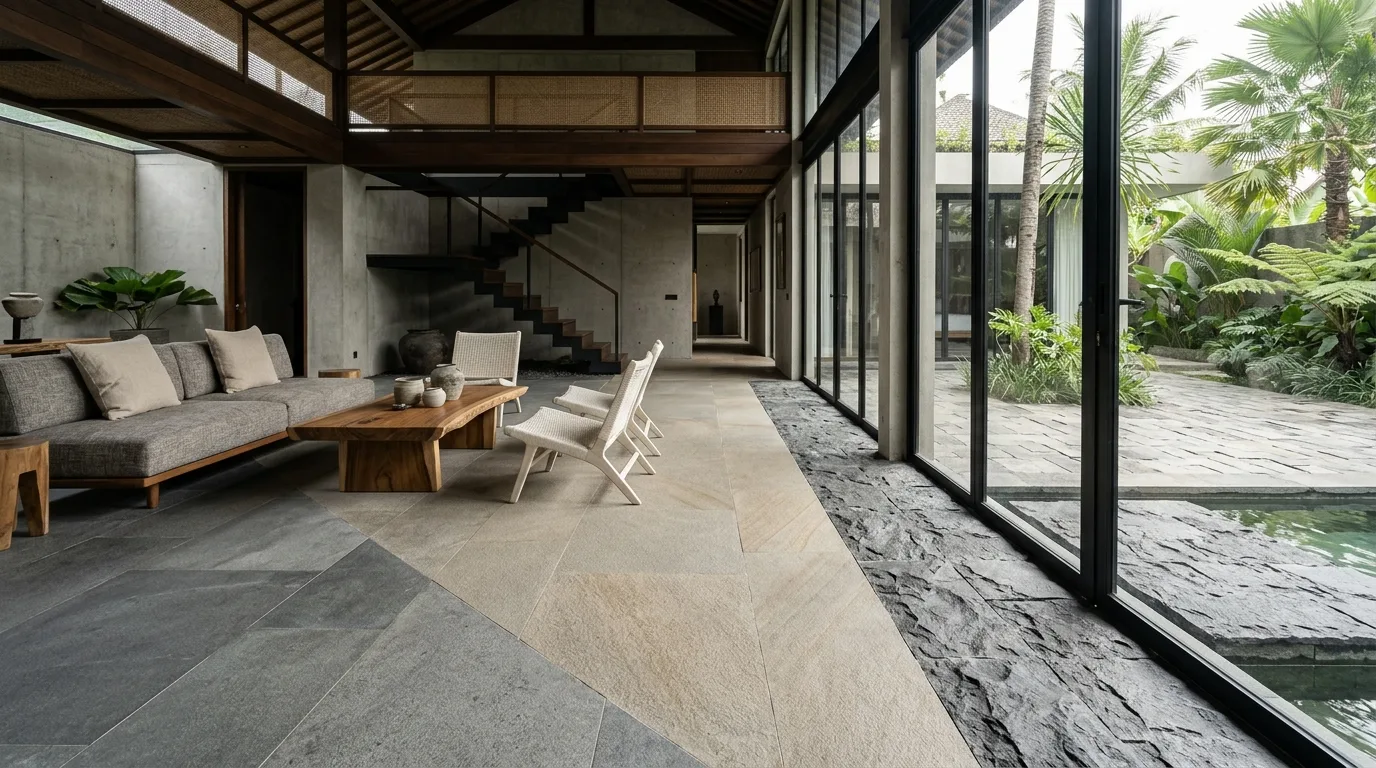
The floor occupies a large visual field, so its finish can influence the apparent brightness, texture and formality of an interior. A matte surface may read differently from a more reflective treatment even when the stone itself is identical. The primary question behind natural stone floor finishes is therefore best answered through the actual project conditions, not through a generic material label.
Floor finishes change the room
The floor occupies a large visual field, so its finish can influence the apparent brightness, texture and formality of an interior. A matte surface may read differently from a more reflective treatment even when the stone itself is identical.
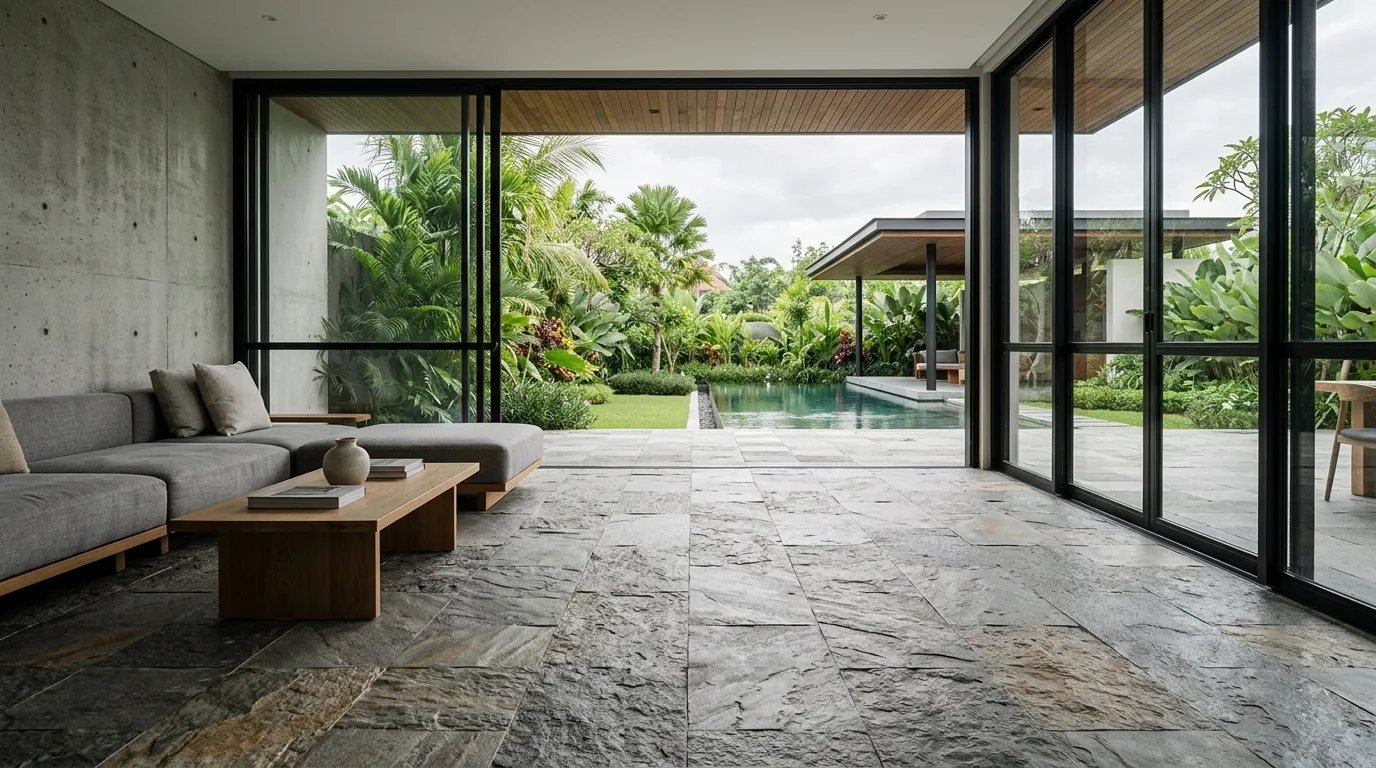
Honed and quieter surfaces
A low-reflection finish can create a calm floor and allow natural variation to remain visible without strong glare. It can be useful where the design calls for a restrained material background.
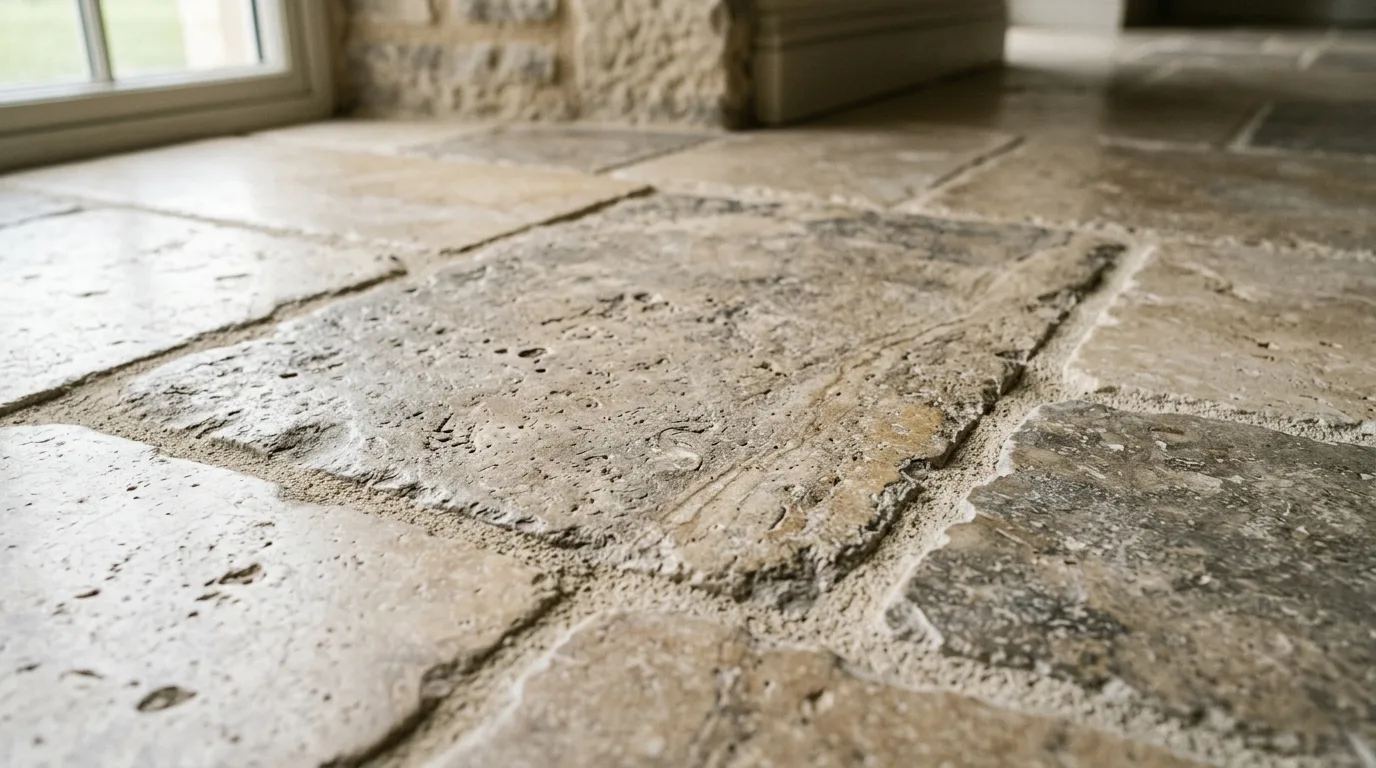
More textured finishes
Textured finishes can emphasize tactile character and natural relief. They may be particularly expressive in transitional or rustic-inspired interiors, but the cleaning implications should be considered.

Reflective surfaces
Highly reflective finishes can make a space feel visually brighter and emphasize pattern. They can also reveal reflections and surface marks more readily, so the expected maintenance routine matters.
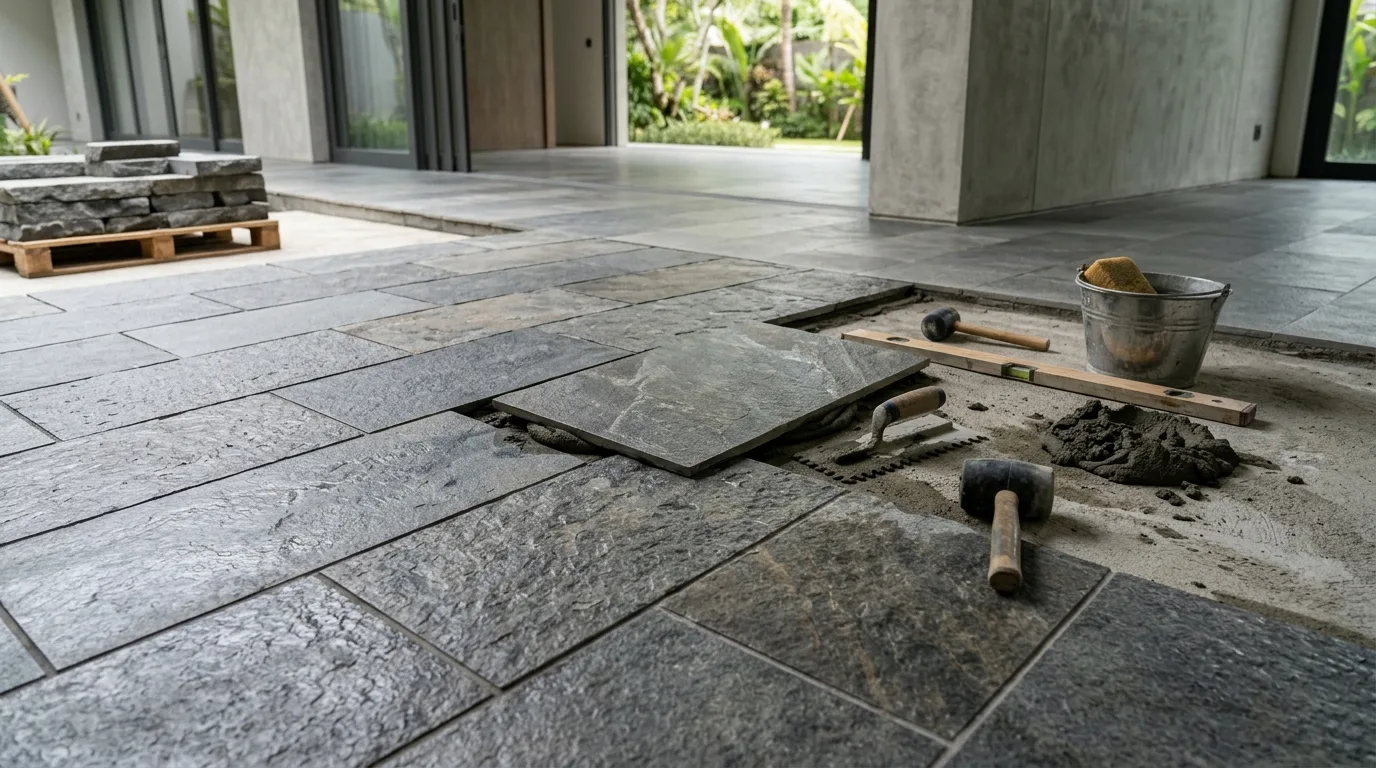
Joint rhythm still matters
Finish is only one part of the floor design. Tile size, joint width and laying pattern can be equally influential. Review the complete floor sample rather than judging finish in isolation.
Furniture changes the reading
A floor is rarely viewed empty. Rugs, furniture, cabinetry and daylight cover portions of the surface. Choose a finish that remains appropriate when the room is occupied.
Transitions need consistency
Where two finishes meet, the difference can become a deliberate detail or an awkward break. Coordinate thresholds and transitions between rooms before ordering.
Approve the complete surface
Use physical samples and, where appropriate, a mock-up to evaluate finish, color, joints and surrounding materials together. This gives the project team a more realistic basis for final selection.
A practical project checklist
- Room scale
- Finish
- Tile format
- Joint rhythm
- Lighting
- Furniture relationship
- Transitions
- Maintenance
Questions buyers and designers should ask
How does a floor finish affect an interior? It changes reflectivity, texture, visual calm and the way the stone interacts with furniture and light.
Final takeaway
The most reliable approach to natural stone floor finishes is to define the application, verify the actual material or finish, review a physical reference, and document the approved specification before production. Natural stone is a real material with variation, while manufactured alternatives and different finishing processes can behave differently. Clear information at the selection stage helps designers, buyers, suppliers and installers work from the same expectation.
For an international project, continue that clarity through packing, labeling and delivery documentation. Keep the approved sample, drawings and product information together so the delivered material can be checked against the intended scope. This is especially useful when a project is large, phased or being coordinated across different teams.
A good material decision is therefore not simply about choosing a stone that looks attractive. It is about choosing a product whose appearance, format, finish, installation requirements and maintenance expectations make sense for the place where it will be used.
The direction of daylight can make floor finish especially noticeable. A reflective surface may emphasize light movement, while a matte finish can create a more even visual field. Look at the floor from the main approaches to the room rather than only from directly above a sample.
Room function should influence the decision. Entryways, kitchens, bathrooms, living areas and circulation spaces have different traffic and cleaning patterns. The finish should support those patterns while maintaining the desired architectural character.
Large areas of one finish can make small differences in stone variation more apparent. Review several pieces together when the floor is intended to feel consistent. This is especially important when the stone has a naturally varied color range.
The best floor specification connects stone, finish, format, joint, threshold and maintenance guidance. Treating the finish as one isolated choice can overlook the way these elements work together after installation.
An interior floor also interacts with adjacent wall surfaces and furniture. A reflective finish can bounce light toward cabinetry and windows, while a quieter finish can visually recede and make walls or furniture more prominent. The choice should therefore be judged from the normal eye level of the room. Consider entry views, seating positions and transitions between spaces. When several stone finishes are used in one project, make sure their differences are intentional. A subtle transition can add hierarchy, while an accidental change can make rooms feel disconnected.
An interior floor also interacts with adjacent wall surfaces and furniture. A reflective finish can bounce light toward cabinetry and windows, while a quieter finish can visually recede and make walls or furniture more prominent. The choice should therefore be judged from the normal eye level of the room. Consider entry views, seating positions and transitions between spaces. When several stone finishes are used in one project, make sure their differences are intentional. A subtle transition can add hierarchy, while an accidental change can make rooms feel disconnected.
When comparing floor finishes, place samples on the floor rather than holding them vertically. The angle of light, surrounding furniture and distance from the surface can change the visual impression. Walk across the sample if the project allows it and consider how the finish feels in normal use. For commercial interiors, also think about cleaning equipment and routine maintenance. The final choice should balance the intended appearance with the realities of the building.
When comparing floor finishes, place samples on the floor rather than holding them vertically. The angle of light, surrounding furniture and distance from the surface can change the visual impression. Walk across the sample if the project allows it and consider how the finish feels in normal use. For commercial interiors, also think about cleaning equipment and routine maintenance. The final choice should balance the intended appearance with the realities of the building.
When comparing floor finishes, place samples on the floor rather than holding them vertically. The angle of light, surrounding furniture and distance from the surface can change the visual impression. Walk across the sample if the project allows it and consider how the finish feels in normal use. For commercial interiors, also think about cleaning equipment and routine maintenance. The final choice should balance the intended appearance with the realities of the building.
Keeping the project reference clear
Once the material decision is made, keep the approved reference connected to every later stage. Record the exact product, finish, format, sample and intended application, then share that information with the people responsible for purchasing, production, inspection and installation. For natural stone floor finishes, this simple documentation step helps prevent a design decision from becoming distorted as the project moves from concept to quotation and finally to the finished site.
It is also useful to keep photographs of approved samples and completed installations. They can support future repairs, additional phases and quality discussions. Natural materials should be judged against realistic expectations of variation, while manufactured products should be identified by their exact product references. Clear records make both approaches easier to manage.