
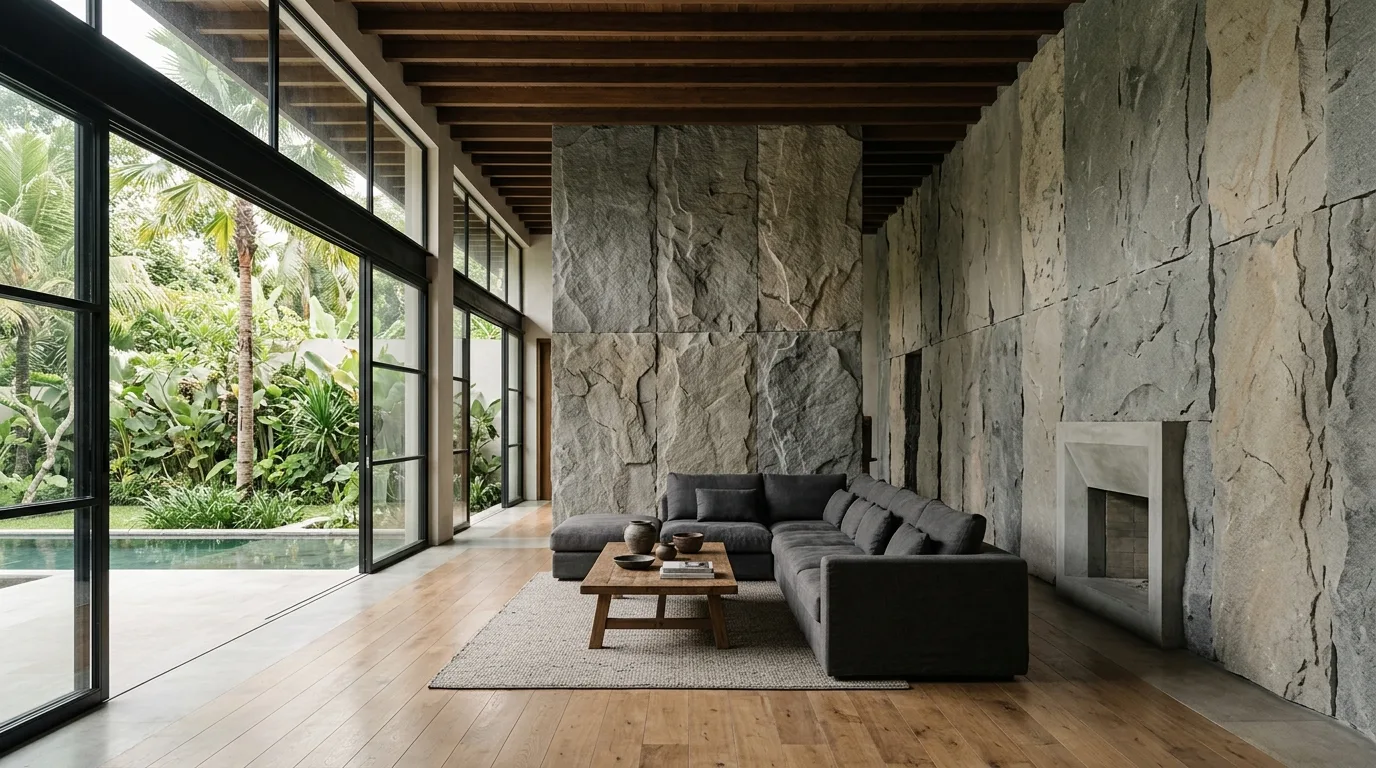
Large-format natural stone reduces the number of visible joints across a surface. The result can make a room feel calmer and allow the stone's natural pattern to read over a broader field. The primary question behind large format natural stone tile is therefore best answered through the actual project conditions, not through a generic material label.
Why scale feels different
Large-format natural stone reduces the number of visible joints across a surface. The result can make a room feel calmer and allow the stone's natural pattern to read over a broader field.
Large pieces need planning
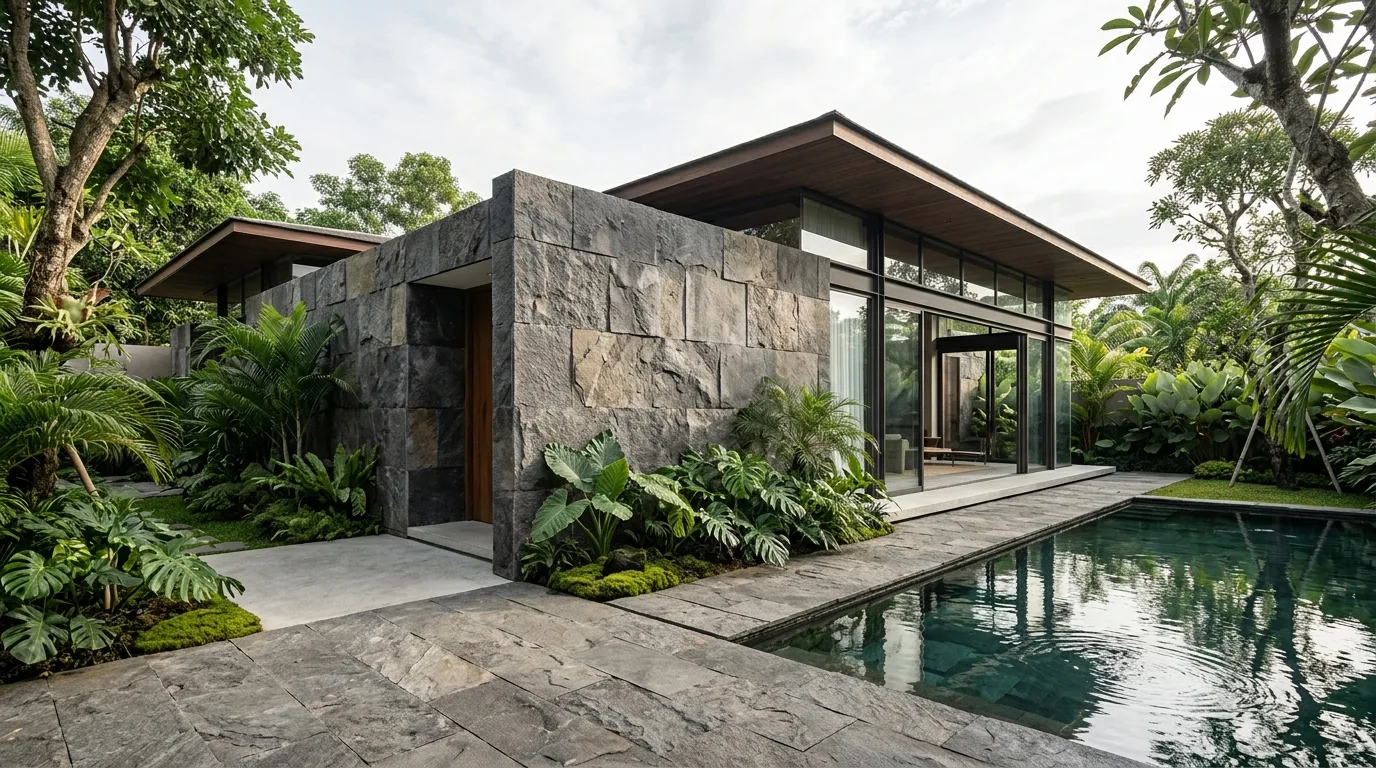
Large tiles or slabs require careful measurement, handling and installation planning. Access routes, lifting, substrate flatness and storage can become more important as piece size increases.
Fewer joints, stronger composition
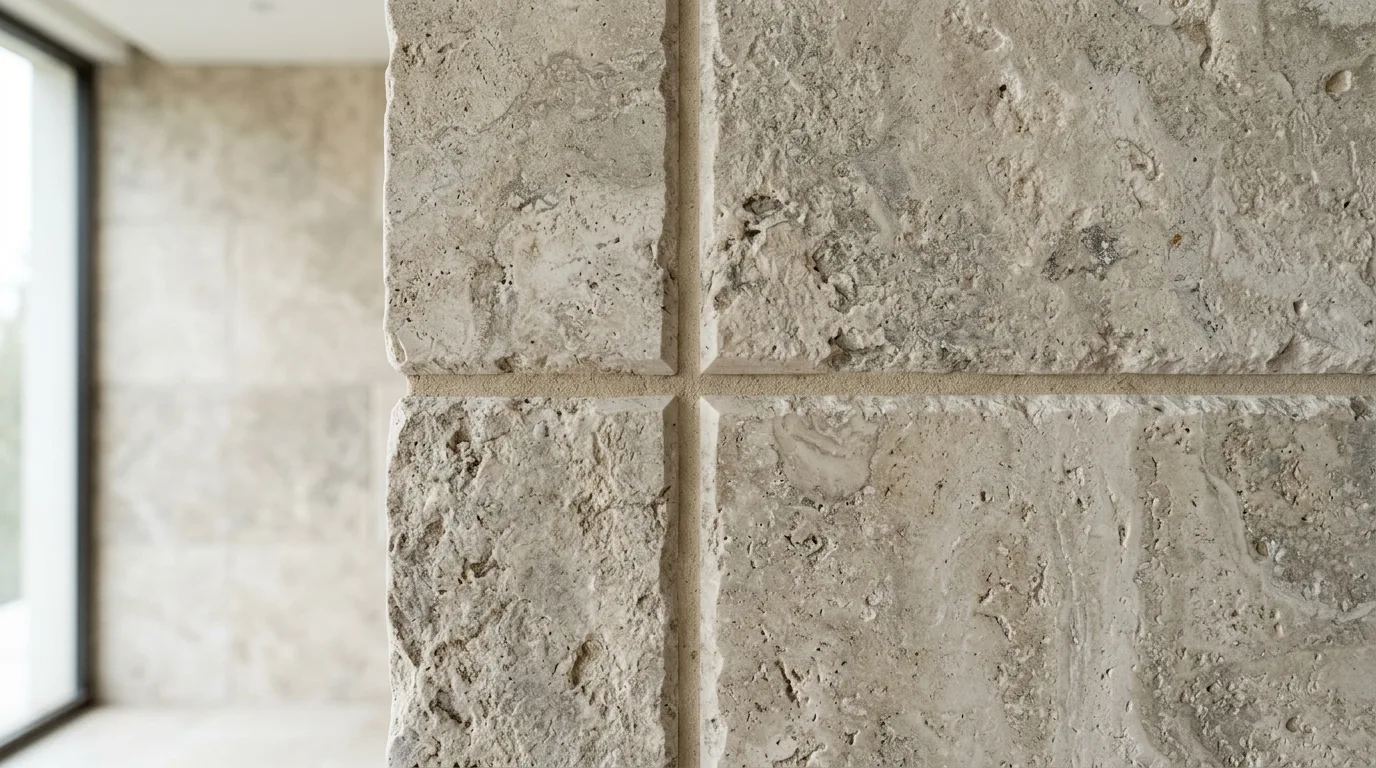
Reduced joint frequency can emphasize the architecture. Aligning joints with walls, cabinetry and openings can make the surface appear intentionally integrated with the room.
Variation becomes more visible
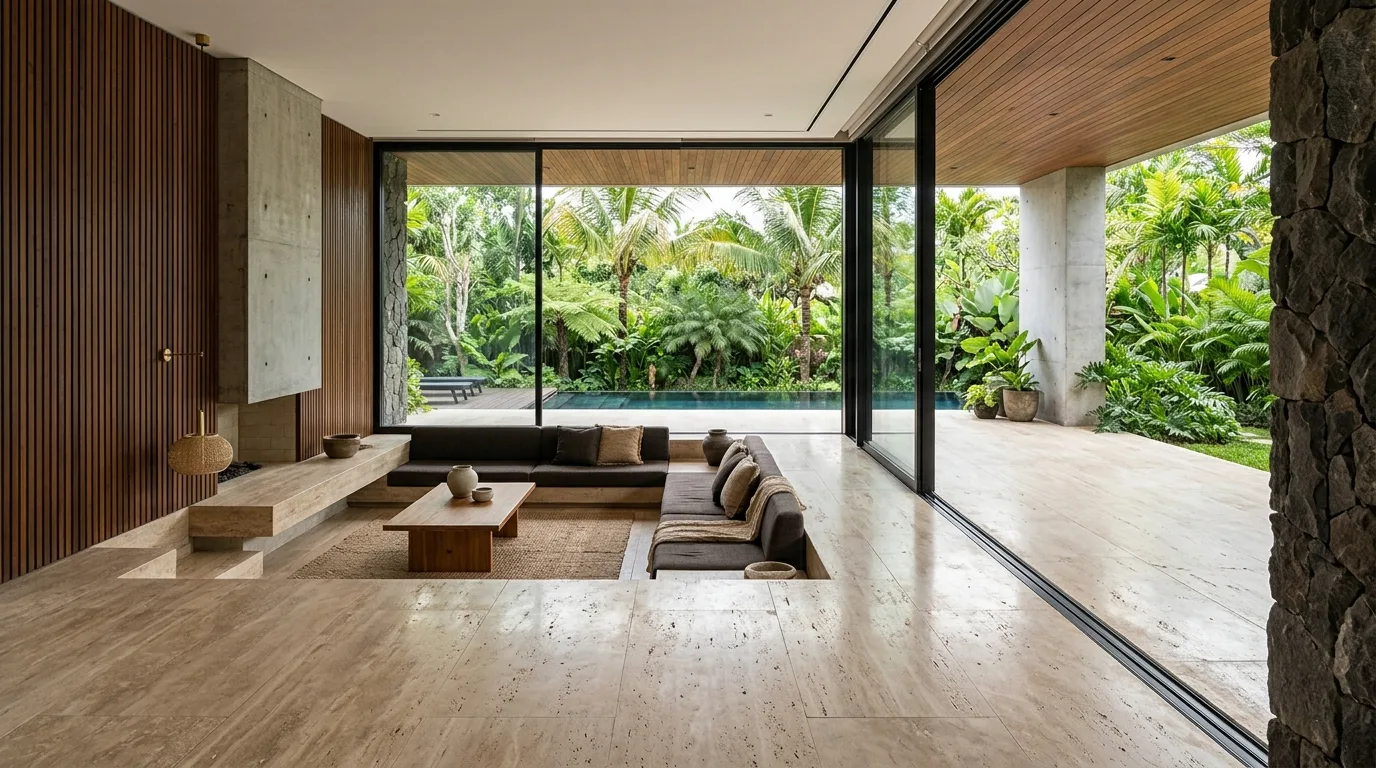
A large piece can display a greater portion of the stone's natural character. This can be an advantage when the material has attractive movement, but it also means slab or piece selection may matter more.
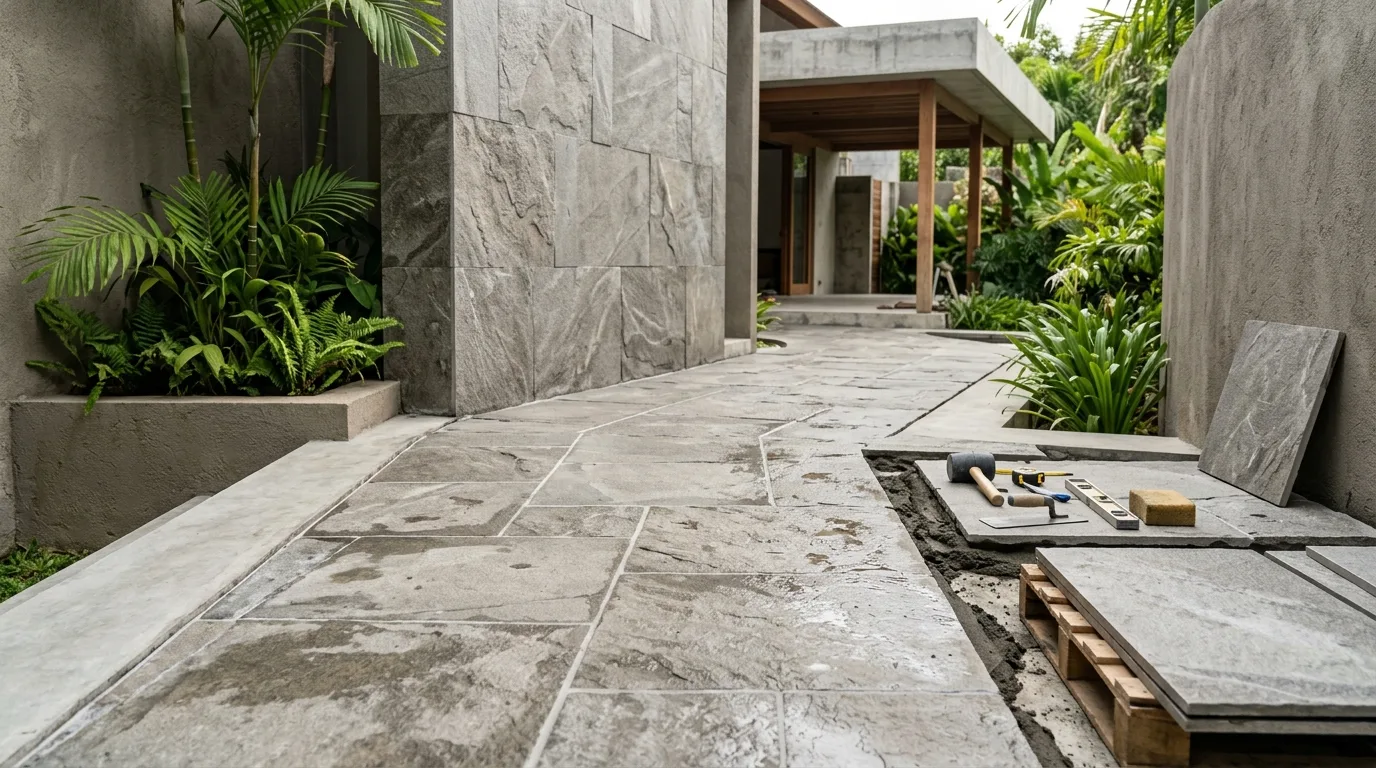
Small rooms can benefit too
Large-format stone is not limited to large buildings. In a compact space, fewer joints can reduce visual interruption. The actual dimensions of the room should determine whether the format can be installed efficiently.
Corners and penetrations
Doors, drains, outlets and columns can create difficult cuts. A layout drawing should show these points before material is ordered.
Handling and fabrication
Large pieces can require additional equipment or careful site coordination. Confirm the supplier's available dimensions and the installer’s capability before finalizing the design.
Specify the complete system
Document dimensions, thickness, finish, joint approach, substrate, handling assumptions and layout. Large format works best when design and installation planning are developed together.
A practical project checklist
- Piece dimensions
- Access and handling
- Substrate
- Joint layout
- Natural variation
- Cutouts
- Installation capability
- Protection
Questions buyers and designers should ask
What should be checked before using large-format natural stone? Confirm dimensions, access, handling, substrate, joints, cutouts, natural variation and installer capability.
Final takeaway
The most reliable approach to large format natural stone tile is to define the application, verify the actual material or finish, review a physical reference, and document the approved specification before production. Natural stone is a real material with variation, while manufactured alternatives and different finishing processes can behave differently. Clear information at the selection stage helps designers, buyers, suppliers and installers work from the same expectation.
For an international project, continue that clarity through packing, labeling and delivery documentation. Keep the approved sample, drawings and product information together so the delivered material can be checked against the intended scope. This is especially useful when a project is large, phased or being coordinated across different teams.
A good material decision is therefore not simply about choosing a stone that looks attractive. It is about choosing a product whose appearance, format, finish, installation requirements and maintenance expectations make sense for the place where it will be used.
Large-format material can make architectural geometry more visible. A poorly positioned joint may stand out across an otherwise calm wall or floor, so the layout should be drawn before fabrication. Doors, columns and cabinetry can become useful alignment points.
Natural variation can also become a stronger part of the composition. A large piece may display a broad area of grain or mineral movement that would be divided across smaller tiles. Decide whether this is desirable for the project before ordering.
Transportation and site access deserve early attention. Measure doors, corridors, lifts and stair routes where relevant, and confirm how the pieces will be handled. A format that fits the room but cannot be safely moved into position is not a practical specification.
Protection after installation is equally important. Large pieces can be visually prominent, so damage from later trades may be particularly noticeable. Include temporary protection in the construction sequence.
The larger the format, the more important site measurement becomes. Small dimensional errors that disappear across many small tiles can become obvious when a single large piece spans most of a wall. Confirm wall and floor dimensions, openings and finished levels before fabrication. Also consider the route from delivery point to installation area. Handling equipment, lifting points and temporary storage should be agreed with the contractor. Large-format design can be visually calm, but achieving that calm appearance requires more coordination behind the scenes.
The larger the format, the more important site measurement becomes. Small dimensional errors that disappear across many small tiles can become obvious when a single large piece spans most of a wall. Confirm wall and floor dimensions, openings and finished levels before fabrication. Also consider the route from delivery point to installation area. Handling equipment, lifting points and temporary storage should be agreed with the contractor. Large-format design can be visually calm, but achieving that calm appearance requires more coordination behind the scenes.
Large-format stone can create a strong sense of continuity, but that continuity depends on good joint placement. A floor with one poorly positioned joint can draw attention away from the rest of the room. Use the architectural grid as the starting point and coordinate the stone layout with doors, walls, cabinetry and other fixed elements. When the pieces are fabricated, keep the approved drawing available so production follows the same visual logic.
Large-format stone can create a strong sense of continuity, but that continuity depends on good joint placement. A floor with one poorly positioned joint can draw attention away from the rest of the room. Use the architectural grid as the starting point and coordinate the stone layout with doors, walls, cabinetry and other fixed elements. When the pieces are fabricated, keep the approved drawing available so production follows the same visual logic.
Large-format stone can create a strong sense of continuity, but that continuity depends on good joint placement. A floor with one poorly positioned joint can draw attention away from the rest of the room. Use the architectural grid as the starting point and coordinate the stone layout with doors, walls, cabinetry and other fixed elements. When the pieces are fabricated, keep the approved drawing available so production follows the same visual logic.
Keeping the project reference clear
Once the material decision is made, keep the approved reference connected to every later stage. Record the exact product, finish, format, sample and intended application, then share that information with the people responsible for purchasing, production, inspection and installation. For large format natural stone tile, this simple documentation step helps prevent a design decision from becoming distorted as the project moves from concept to quotation and finally to the finished site.
It is also useful to keep photographs of approved samples and completed installations. They can support future repairs, additional phases and quality discussions. Natural materials should be judged against realistic expectations of variation, while manufactured products should be identified by their exact product references. Clear records make both approaches easier to manage.