
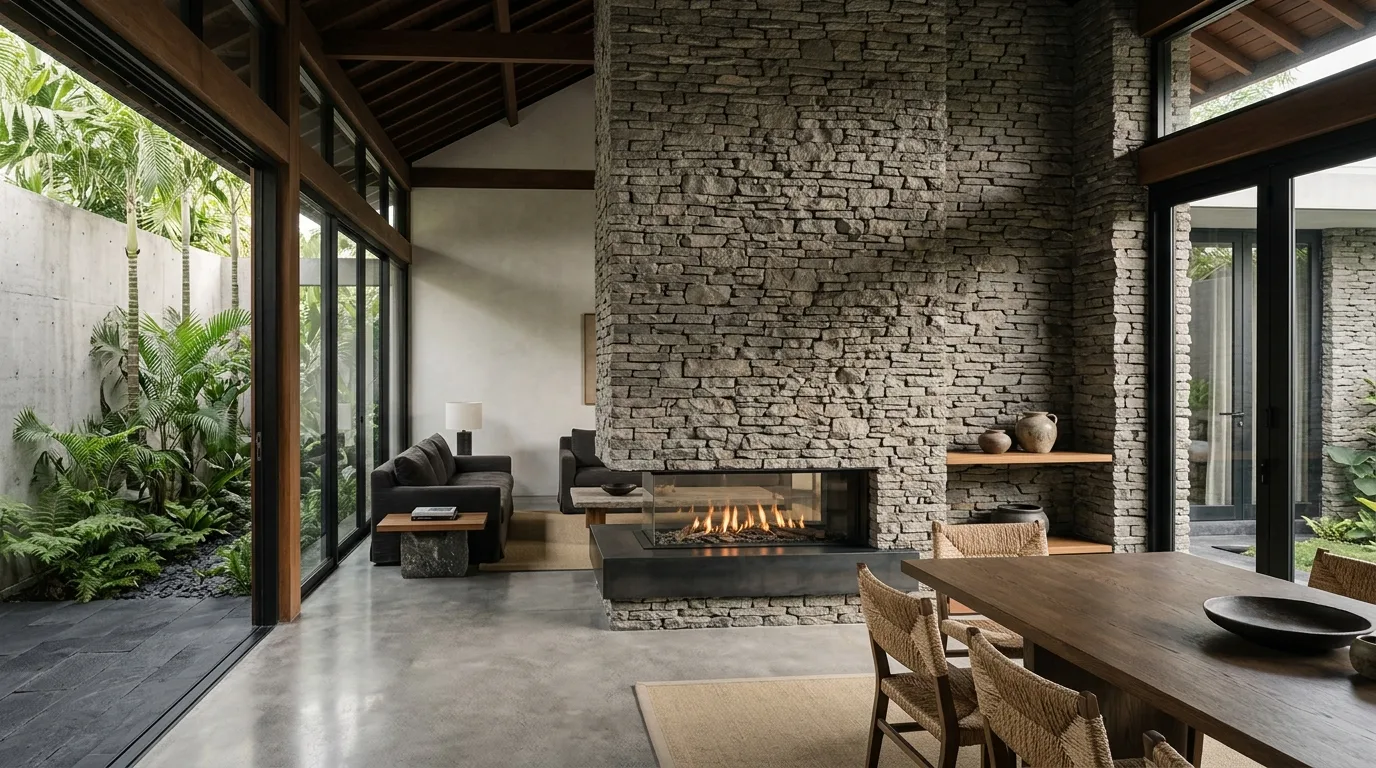
Stacked stone uses multiple pieces arranged to create a layered wall surface. The joints, relief and irregularity can produce shadows that make a flat wall feel deeper. The primary question behind natural stone stacked stone is therefore best answered through the actual project conditions, not through a generic material label.
What stacked stone means visually
Stacked stone uses multiple pieces arranged to create a layered wall surface. The joints, relief and irregularity can produce shadows that make a flat wall feel deeper.
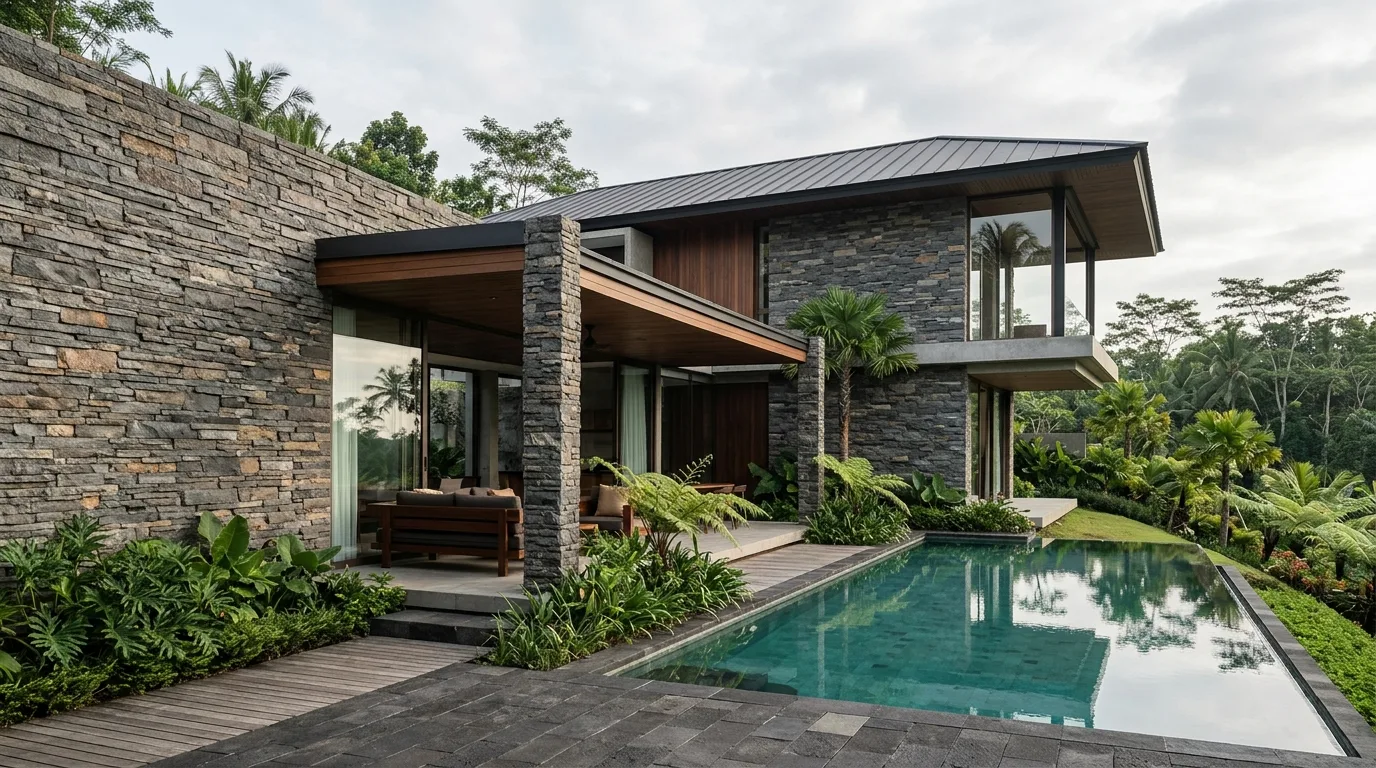
Feature walls
A stacked stone wall can anchor an entrance, living room, garden structure or hospitality space. The larger the wall, the more important the overall distribution of stone sizes and tones becomes.
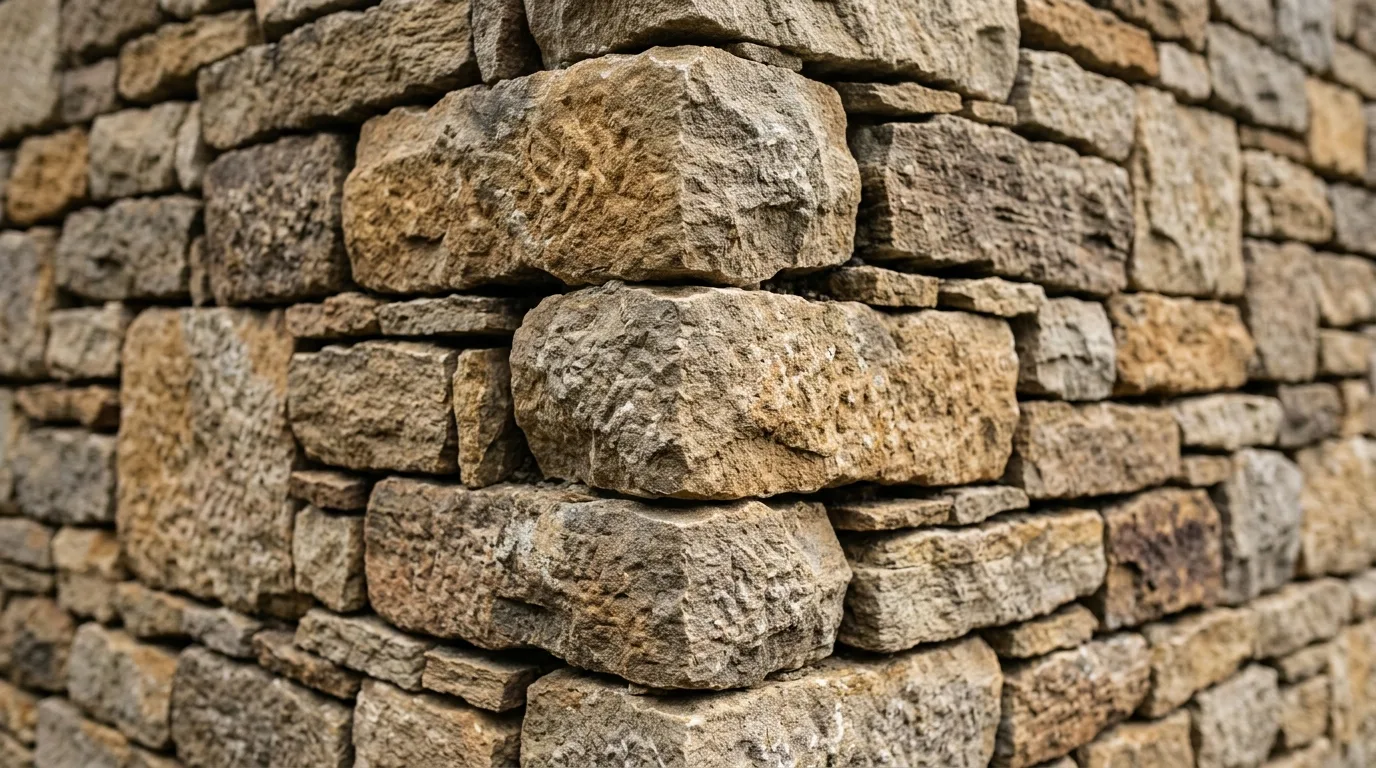
Fireplace applications
Around a fireplace, stacked stone can emphasize the vertical mass of the hearth or chimney. Heat-related construction and clearances should be addressed by the appropriate professionals before the stone detail is finalized.
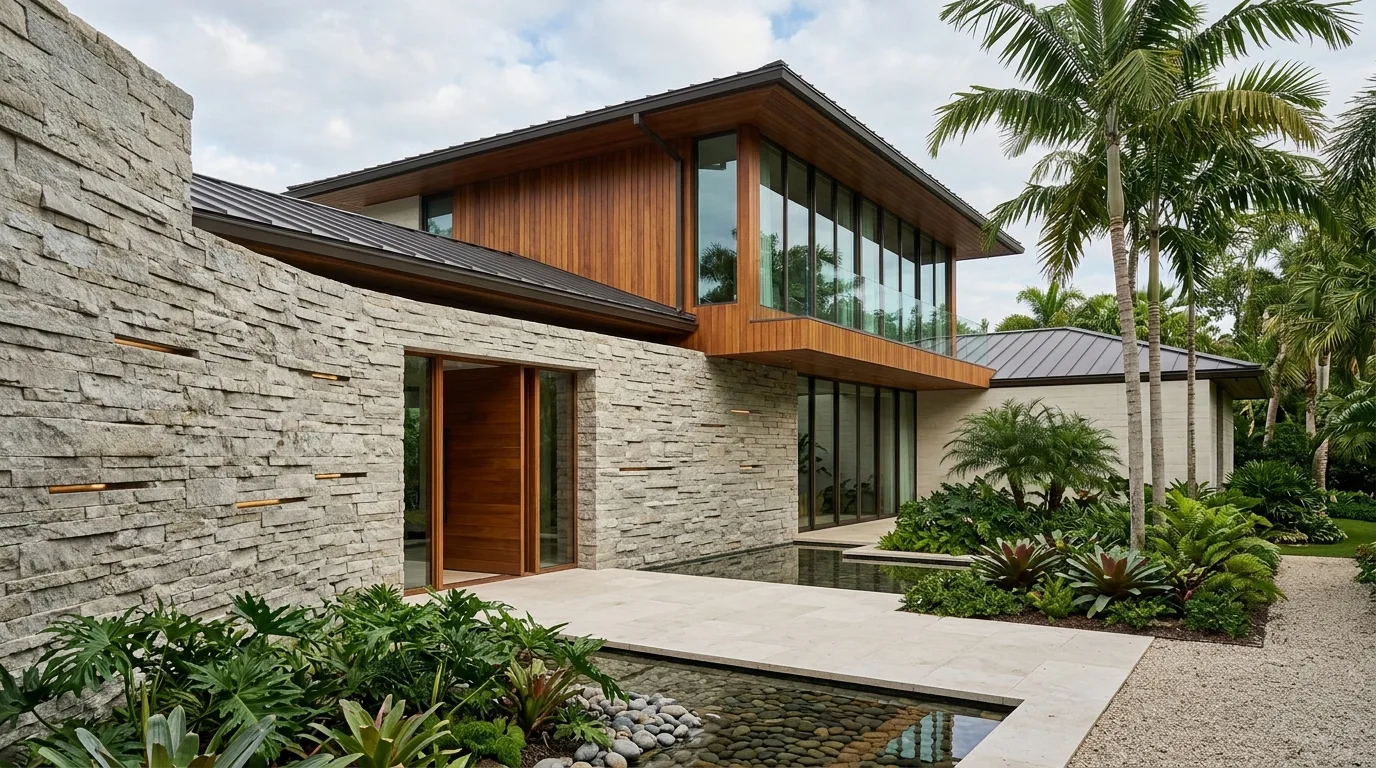
Indoor versus outdoor use
The surrounding conditions influence the stone, fixing method and maintenance requirements. Exterior applications need attention to moisture exposure and the wall system, while interiors may place greater emphasis on dust and cleaning.
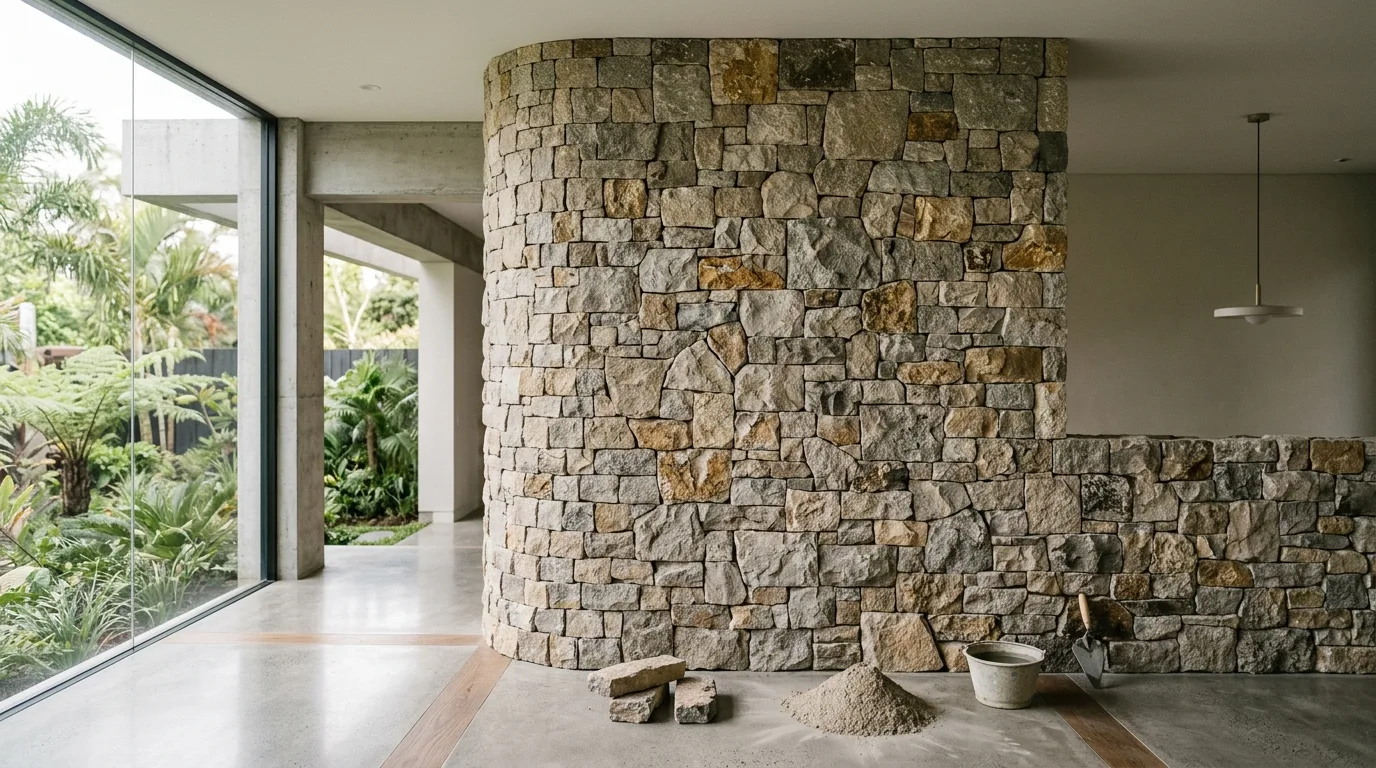
Control the visual density
Strong relief can become dominant when used across a large area. Balance it with smooth plaster, timber, painted walls or simple flooring where appropriate.
Corners and returns
A stacked stone wall needs a credible corner. Depending on the product, this may involve corner pieces, returns or a carefully detailed edge. Resolve the detail before installation.
Lighting makes the difference
Grazing light can reveal every ridge and joint. If texture is a major part of the concept, lighting should be coordinated with the wall design.
Specification and maintenance
Confirm product type, piece dimensions, thickness, finish, installation system and cleaning guidance. A documented specification helps maintain the intended appearance over time.
A practical project checklist
- Wall location
- Piece scale
- Corners
- Fireplace requirements
- Relief
- Lighting
- Surrounding materials
- Maintenance
Questions buyers and designers should ask
Where does stacked natural stone work well? Feature walls, fireplaces, entrances and selected exterior surfaces can use stacked stone when scale and detailing are appropriate.
Final takeaway
The most reliable approach to natural stone stacked stone is to define the application, verify the actual material or finish, review a physical reference, and document the approved specification before production. Natural stone is a real material with variation, while manufactured alternatives and different finishing processes can behave differently. Clear information at the selection stage helps designers, buyers, suppliers and installers work from the same expectation.
For an international project, continue that clarity through packing, labeling and delivery documentation. Keep the approved sample, drawings and product information together so the delivered material can be checked against the intended scope. This is especially useful when a project is large, phased or being coordinated across different teams.
A good material decision is therefore not simply about choosing a stone that looks attractive. It is about choosing a product whose appearance, format, finish, installation requirements and maintenance expectations make sense for the place where it will be used.
Stacked stone works through repetition of small changes. Differences in piece length, projection and tone can create a wall that feels organic rather than mechanically patterned. The installation should distribute those differences rather than concentrating them in one area.
The background architecture matters as well. A stacked stone feature beside smooth concrete or plaster can create contrast, while combining it with several other textured materials may make the room feel crowded. Give the stone enough visual space to establish its identity.
Outdoor walls require additional attention to water management and fixing. Interior feature walls have different priorities, but both need a suitable substrate and installation method. Product instructions and project requirements should guide the final system.
Before installation, review a representative section at full scale. This can reveal whether the relief, joint density and color distribution are producing the intended effect.
The material around a stacked stone feature should usually provide visual breathing room. Smooth plaster, timber or simple flooring can make the relief easier to appreciate. If the wall is combined with other textured finishes, review the entire composition from the main viewing points. Exterior applications should also consider water movement and the condition of the supporting wall. The stone face may be visually simple, but the installation system behind it remains an important part of the project. A clear detail drawing is valuable wherever corners, openings or changes in wall plane occur.
The material around a stacked stone feature should usually provide visual breathing room. Smooth plaster, timber or simple flooring can make the relief easier to appreciate. If the wall is combined with other textured finishes, review the entire composition from the main viewing points. Exterior applications should also consider water movement and the condition of the supporting wall. The stone face may be visually simple, but the installation system behind it remains an important part of the project. A clear detail drawing is valuable wherever corners, openings or changes in wall plane occur.
The best stacked-stone applications usually have a clear beginning and end. At the base, the wall should meet the floor or landscape cleanly; at the top, the stone should terminate against the adjacent architecture with a deliberate detail. Corners deserve equal attention. If the product has matching corner pieces, confirm their availability before ordering. If not, decide how the exposed edge will be finished. These details determine whether the relief reads as a complete architectural surface.
The best stacked-stone applications usually have a clear beginning and end. At the base, the wall should meet the floor or landscape cleanly; at the top, the stone should terminate against the adjacent architecture with a deliberate detail. Corners deserve equal attention. If the product has matching corner pieces, confirm their availability before ordering. If not, decide how the exposed edge will be finished. These details determine whether the relief reads as a complete architectural surface.
The best stacked-stone applications usually have a clear beginning and end. At the base, the wall should meet the floor or landscape cleanly; at the top, the stone should terminate against the adjacent architecture with a deliberate detail. Corners deserve equal attention. If the product has matching corner pieces, confirm their availability before ordering. If not, decide how the exposed edge will be finished. These details determine whether the relief reads as a complete architectural surface.
Keeping the project reference clear
Once the material decision is made, keep the approved reference connected to every later stage. Record the exact product, finish, format, sample and intended application, then share that information with the people responsible for purchasing, production, inspection and installation. For natural stone stacked stone, this simple documentation step helps prevent a design decision from becoming distorted as the project moves from concept to quotation and finally to the finished site.
It is also useful to keep photographs of approved samples and completed installations. They can support future repairs, additional phases and quality discussions. Natural materials should be judged against realistic expectations of variation, while manufactured products should be identified by their exact product references. Clear records make both approaches easier to manage.